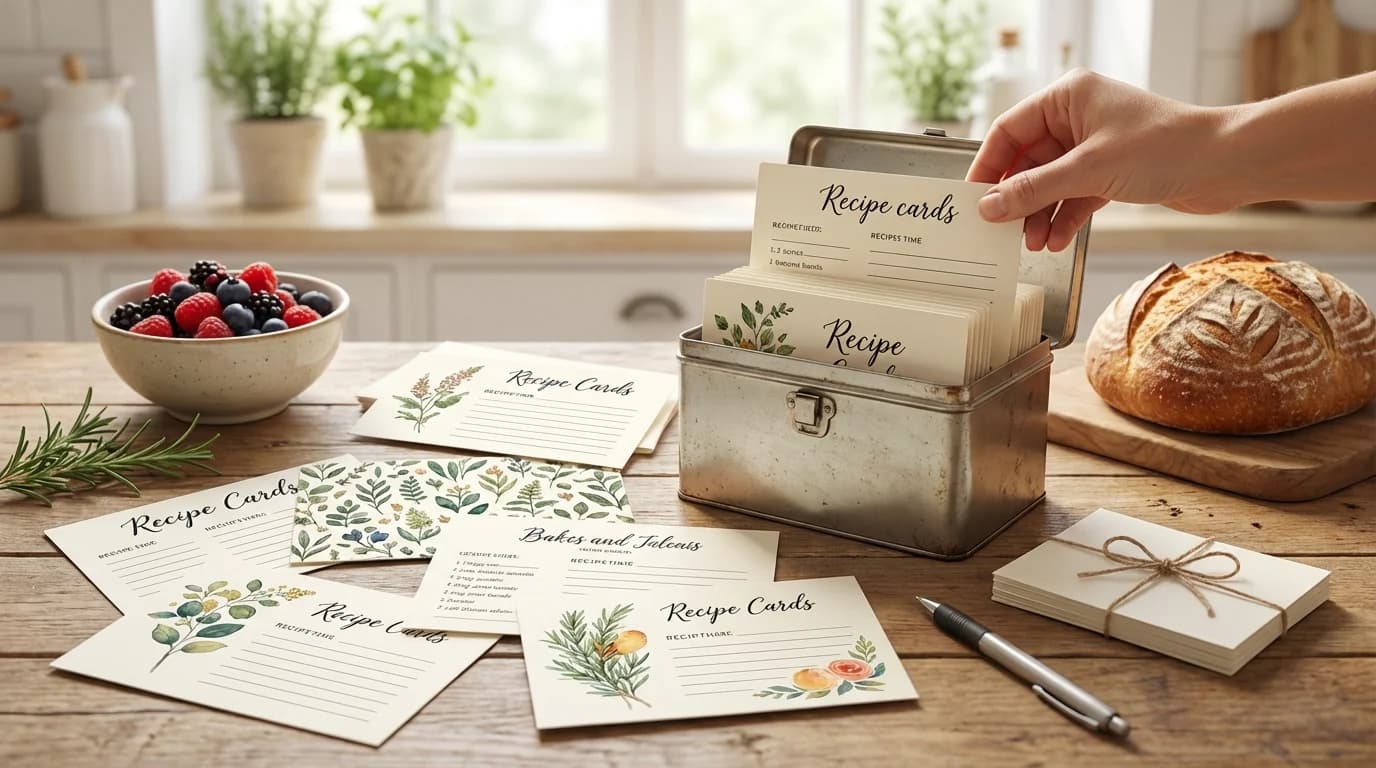
There's something wonderfully tangible about a beautifully designed recipe card. In our digital age, the act of handwriting a cherished recipe, printing it on quality cardstock, and placing it in a recipe box feels both nostalgic and intentional. It's a creative expression that transforms everyday recipes into keepsakes.
Last year, I created custom recipe cards for my family's holiday cookbook. The process of designing them, selecting fonts and colors that reflected our family's personality, and watching relatives fill them out with their signature dishes became as meaningful as the recipes themselves.
Whether you're creating recipe cards for a bridal shower, preserving grandmother's recipes, organizing your own collection, or making thoughtful gifts, printable recipe cards offer endless creative possibilities. Let's explore ideas, templates, and tips for making recipe cards that are both beautiful and functional.
Why Printable Recipe Cards?
In a digital world, why bother with printed cards?
The Enduring Appeal
Tangible and Personal: Handwritten recipe cards carry personality that typed versions can't match. Seeing your grandmother's handwriting or a bride's careful script makes the recipe special.
Gift-Worthy: A set of beautifully designed recipe cards makes an incredibly thoughtful gift—for weddings, housewarmings, birthdays, or just because.
Display-Friendly: Pretty recipe cards can be displayed in the kitchen as decor, keeping favorite recipes visible and accessible.
No Battery Required: Print cards work when your phone dies, your tablet is charging, or you're cooking at a cabin with no wifi.
Heirloom Quality: Well-made recipe cards become family heirlooms, passing down through generations alongside the recipes they hold.
Creative Outlet: Designing recipe cards lets you express personality through colors, fonts, graphics, and layout.
Recipe Card Sizes and Formats
Choose the right size for your needs.
Standard Sizes
4x6 inches (Most Popular):
- Pros: Fits standard photo boxes, widely available holders, substantial enough for full recipes
- Cons: Slightly larger to store
- Best for: Complete recipes, family collections, gifts
3x5 inches (Classic):
- Pros: Compact, traditional size, easy to store, fits small boxes
- Cons: Limited space for long recipes
- Best for: Simple recipes, large collections, vintage aesthetics
5x7 inches (Generous):
- Pros: Lots of room for ingredients, instructions, and notes
- Cons: Requires larger storage, less common size
- Best for: Complex recipes, recipes with stories, display cards
Letter or A4 (Full Page):
- Pros: Maximum space, can include photos and extensive notes
- Cons: Not traditional "card" format, requires binder storage
- Best for: Detailed family heirlooms, cookbook pages, teaching recipes
Custom Sizes: Digital design tools let you create any size:
- Square cards (4x4, 5x5) for modern aesthetic
- Tall narrow cards for specific storage systems
- Oversized cards for display purposes
Orientation
Portrait (Vertical):
- Traditional look
- Better for recipes with long ingredient lists
- Easier to display on stands
Landscape (Horizontal):
- Modern feel
- Good for recipes with extensive instructions
- Works well for two-column layouts
Both Sides: Many recipes need front and back:
- Front: Recipe name, ingredients, basic info
- Back: Instructions, notes, stories
- Don't forget to design both sides!
Design Styles and Themes
Your recipe card design should reflect personality and purpose.
Classic and Traditional
Characteristics:
- Serif fonts (Times New Roman, Garamond, Baskerville)
- Ornate borders and decorative elements
- Muted color palette (cream, burgundy, navy, forest green)
- Vintage graphics (rolling pins, wheat, mason jars)
Perfect for:
- Heirloom family recipes
- Traditional cookbooks
- Formal gifts
- Preserving grandmother's recipes
Modern and Minimalist
Characteristics:
- Sans-serif fonts (Helvetica, Avenir, Montserrat)
- Clean lines, lots of white space
- Bold accent colors or black and white
- Simple geometric shapes
Perfect for:
- Contemporary kitchens
- Young couples
- Streamlined collections
- Professional appearance
Rustic and Farmhouse
Characteristics:
- Mix of script and sans-serif fonts
- Warm earth tones (brown, tan, sage, terracotta)
- Wood grain or kraft paper backgrounds
- Hand-drawn elements, botanical illustrations
Perfect for:
- Country/farmhouse aesthetics
- Garden-to-table recipes
- Natural/organic cooking
- Cozy, homey collections
Vintage and Retro
Characteristics:
- Typewriter or script fonts
- Mid-century color schemes (mint, pink, yellow, turquoise)
- Retro graphics and patterns
- Distressed or aged appearance
Perfect for:
- Recipes from specific eras (1950s, 1970s, etc.)
- Nostalgic collections
- Reproducing historical family recipes
- Themed parties or events
Themed Collections
Holiday:
- Christmas: Red, green, gold, snowflakes, holly
- Thanksgiving: Autumn colors, leaves, pumpkins
- Easter: Pastels, florals, eggs
Seasonal:
- Spring: Florals, pastels, fresh greens
- Summer: Bright colors, fruits, sunshine
- Fall: Warm tones, leaves, harvest themes
- Winter: Cool tones, snowflakes, cozy elements
Cultural/Cuisine:
- Italian: Red, white, green, Italian flags, herbs
- Mexican: Bright colors, peppers, traditional patterns
- French: Elegant fonts, Eiffel tower, fleur-de-lis
- Southern: Homey elements, sweet tea, magnolias
Special Occasions:
- Weddings: Elegant, matches wedding colors
- Baby showers: Soft colors, baby-themed elements
- Bridal showers: Romantic, kitchen-themed
- Housewarmings: Welcoming, home-themed
Essential Elements of Recipe Card Design
What should every recipe card include?
Functional Components
Header Section:
- Recipe name (large, readable font)
- Category or type of dish
- Source or attribution line
- Date (optional but useful for family archives)
Information Block:
- Prep time
- Cook time
- Total time
- Servings/Yield
- Difficulty level (optional)
Ingredients Section:
- Clear heading ("Ingredients")
- Checkboxes for marking off items
- Adequate spacing between ingredients
- Room for measurements and item names
Instructions Section:
- Clear heading ("Instructions" or "Directions")
- Numbered or bulleted steps
- Sufficient space for detailed directions
- Clear, readable font size
Notes Section:
- Space for variations
- Storage tips
- Make-ahead instructions
- Personal notes or family stories
Footer:
- "From the kitchen of..." line
- Website or contact info (if giving as gifts)
- Copyright notice (if applicable)
- Design credit or date
Design Elements
White Space: Don't crowd—let the design breathe
Hierarchy: Most important info (recipe name) should be largest
Alignment: Consistent left, right, or center alignment
Contrast: Ensure text is easily readable against background
Color Scheme: Limit to 2-3 complementary colors
Graphics: Use sparingly—enhance, don't overwhelm
Borders: Frame the card without crowding content
Creating Your Own Printable Recipe Cards
You don't need professional design skills—these tools make it easy.
Design Tools
Canva (Easiest, Recommended for Beginners):
- Free tier with extensive options
- Pre-made recipe card templates
- Drag-and-drop interface
- Custom sizing available
- Can save designs and make variations
- Pro version ($12.99/month) unlocks premium elements
Microsoft Word/Publisher:
- Free with Office subscription
- Table-based layouts work well
- Clip art and shapes available
- Full control over layout
- Can be basic unless you're experienced
Adobe InDesign (Professional):
- Industry-standard design software
- Complete control and flexibility
- Steep learning curve
- Subscription required ($20.99/month)
- Overkill unless you're doing many designs
Google Docs/Slides (Free):
- Collaborative editing
- Access anywhere
- Limited design options
- Works for simple cards
- Easy sharing with family
Template Marketplaces:
- Etsy: Thousands of customizable templates ($3-15)
- Creative Market: Professional designs
- Instant download, customize in Canva or software
- Saves design time
Design Process
Step 1: Define Your Needs
- Purpose (personal use, gifts, family collection?)
- Style preference
- Size and quantity needed
- Printing method (home printer vs. professional)
Step 2: Gather Inspiration
- Pinterest recipe card boards
- Etsy listings
- Vintage recipe cards (family collections, antique stores)
- Modern cookbook designs
- Save images of elements you like
Step 3: Choose Colors and Fonts
- Select 2-3 colors that complement each other
- Choose readable fonts (avoid overly decorative body text)
- Pair fonts well (serif header + sans-serif body, or vice versa)
- Test readability at actual print size
Step 4: Create Template
- Start with one design
- Include all functional elements
- Leave appropriate spacing
- Design both front and back if needed
- Save as reusable template
Step 5: Test Print
- Print one card on regular paper
- Check readability, spacing, alignment
- Write out a sample recipe
- Make adjustments as needed
Step 6: Finalize and Print
- Create final version
- Print on quality cardstock
- Cut carefully (paper cutter recommended)
- Store or distribute as planned
Printing Tips for Best Results
Paper Choice:
Cardstock Weight:
- 65-80 lb: Good for single-use or lightweight cards
- 80-110 lb: Standard, sturdy enough for recipe boxes
- 110+ lb: Premium, very durable, best for heirlooms
Finish:
- Matte: Easy to write on, no glare, classic look
- Glossy: Vibrant colors, photo-quality, harder to write on
- Linen/Textured: Elegant, high-quality feel
Color:
- White: Classic, shows colors accurately
- Cream/Ivory: Vintage feel, warm tone
- Colored: Match theme, ensure text readable
Printer Settings:
- Highest quality setting
- Correct paper type selected
- Print test page first
- Adjust colors if needed (screen colors may differ from print)
Professional Printing: For large quantities or premium quality:
- Local print shops (see samples, support local)
- Online services (Vistaprint, Moo, Shutterfly)
- Office supply stores (Staples, Office Depot)
- Professional results, bulk pricing
Cutting:
- Paper cutter: Clean, straight edges (worthwhile investment)
- Scissors: Works for small quantities, use ruler guide
- Craft knife and ruler: Precise but time-consuming
- Pre-cut cardstock: Purchase correct size to skip cutting
Creative Recipe Card Ideas
DIY Recipe Card Projects
Recipe Card Shower Activity:
- Provide blank cards at bridal/baby shower
- Guests fill out their favorite recipes
- Bride/parents receive instant recipe collection
- Creates meaningful keepsake
Family Reunion Recipe Exchange:
- Everyone brings copies of signature recipe on cards
- Exchange sets with all relatives
- Instant family recipe collection
- Include family tree on back
Meal Train Cards:
- Create cards for freezer meals
- Include recipe + reheating instructions
- Attach to meals for new parents, illness recovery, etc.
- Recipient keeps recipe for future use
Recipe Card Advent Calendar:
- 25 recipe cards for December
- One new holiday recipe each day
- Family tries new recipes together
- Builds holiday traditions
Personalized Gift Sets:
- Curate 10-20 recipes on beautiful cards
- Include specialty ingredient or tool
- Present in decorative box or basket
- Perfect housewarming or wedding gift
Organizing with Recipe Cards
Color-Coded System:
- Different colors for categories
- Pink = Desserts, Green = Vegetables, Yellow = Breakfast, etc.
- Visual sorting at a glance
- Easy to maintain
Laminated Cards:
- Protect frequently-used recipes
- Wipe clean after cooking
- Write notes with dry-erase marker
- Longer-lasting for heirlooms
Display Options:
- Recipe box (classic storage)
- Ring-bound recipe holder (flip through while cooking)
- Easel or stand (display on counter)
- Magnetic backing (attach to fridge)
- Framed (kitchen art that's functional)
Hybrid Digital-Physical:
- Design and organize digitally
- Print favorites for kitchen use
- Keep digital master for editing and backup
- Best of both worlds
Free Printable Recipe Card Resources
Where to Find Free Templates:
Canva:
- Hundreds of free recipe card templates
- Fully customizable
- No design skills needed
- Sign up free at canva.com
Pinterest:
- Search "free printable recipe cards"
- Many bloggers offer free downloads
- Variety of styles
- Print-ready PDFs
Cooking Blogs:
- Many food bloggers offer free recipe cards
- Usually require email signup
- High-quality designs
- Check sites like The Pioneer Woman, Taste of Home
- Digital recipe management
- Print individual recipes as formatted cards
- Professional layouts automatically
- Maintain digital + print versions
Microsoft Office Templates:
- Built-in Word templates
- Search "recipe cards"
- Basic but functional
- Completely free with Office
Special Considerations
Handwriting on Recipe Cards
Best Practices:
- Use fine-tip pen (doesn't bleed)
- Write clearly in print or neat cursive
- Leave adequate spacing
- Test pen on cardstock first
- Consider scanning after handwriting to preserve
Fonts That Look Handwritten: If printing but want handwritten feel:
- Amatic SC
- Dancing Script
- Caveat
- Sacramento
- Great Vibes
Archival Quality
For family heirlooms meant to last:
- Acid-free cardstock
- Archival-quality ink
- Protective sleeves or lamination
- Store in appropriate conditions
- Create digital backup
Copyright Considerations
Safe to Print:
- Your own recipes
- Family recipes
- Public domain recipes
- Your adaptations of basic techniques
Requires Permission/Credit:
- Recipes from cookbooks (often copyrighted)
- Chef or blogger's specific recipes
- Always credit the source
- Don't distribute copyrighted recipes publicly
When in Doubt:
- Use for personal use only
- Credit sources
- Don't sell or widely distribute others' recipes
Storing and Maintaining Recipe Cards
Protection:
- Recipe boxes with lids (dust and moisture protection)
- Page protectors for binders
- Lamination for heavy-use cards
- Keep away from heat and humidity
Organization:
- Alphabetical by recipe name
- By category (desserts, mains, etc.)
- By frequency of use
- Dividers for easy navigation
- See more recipe box organization ideas
Maintenance:
- Wipe down boxes periodically
- Replace damaged cards
- Update recipes as needed
- Add new cards to collection
- Remove recipes you don't make
Getting Started This Week
Day 1: Choose your style and gather inspiration
Day 2: Select or create template in Canva or other tool
Day 3: Design and print test card
Day 4: Make adjustments, finalize design
Day 5: Print first batch of cards
Weekend: Fill out cards with favorite recipes or give as gifts
The Joy of Recipe Cards
In a world of screens and apps, there's something grounding about recipe cards. They slow us down, make us more intentional, connect us to our culinary roots. Whether you're preserving grandmother's recipes, creating a bridal shower activity, or just bringing more beauty into your kitchen, recipe cards offer a creative, meaningful way to celebrate food and family.
The recipe card you create today might become someone's cherished heirloom tomorrow. That handwritten card might be the one your granddaughter uses to make your famous chocolate cake decades from now. It's not just a recipe—it's a legacy.
Ready to organize both your digital and physical recipe collections? Try myrecipe.app for free to manage recipes digitally, then print beautiful cards whenever you want the tangible experience.
About myrecipe
myrecipe helps families save, organize, and share their favorite recipes in one place. Plan meals, create shopping lists, and preserve your culinary traditions.
Start Organizing Recipes