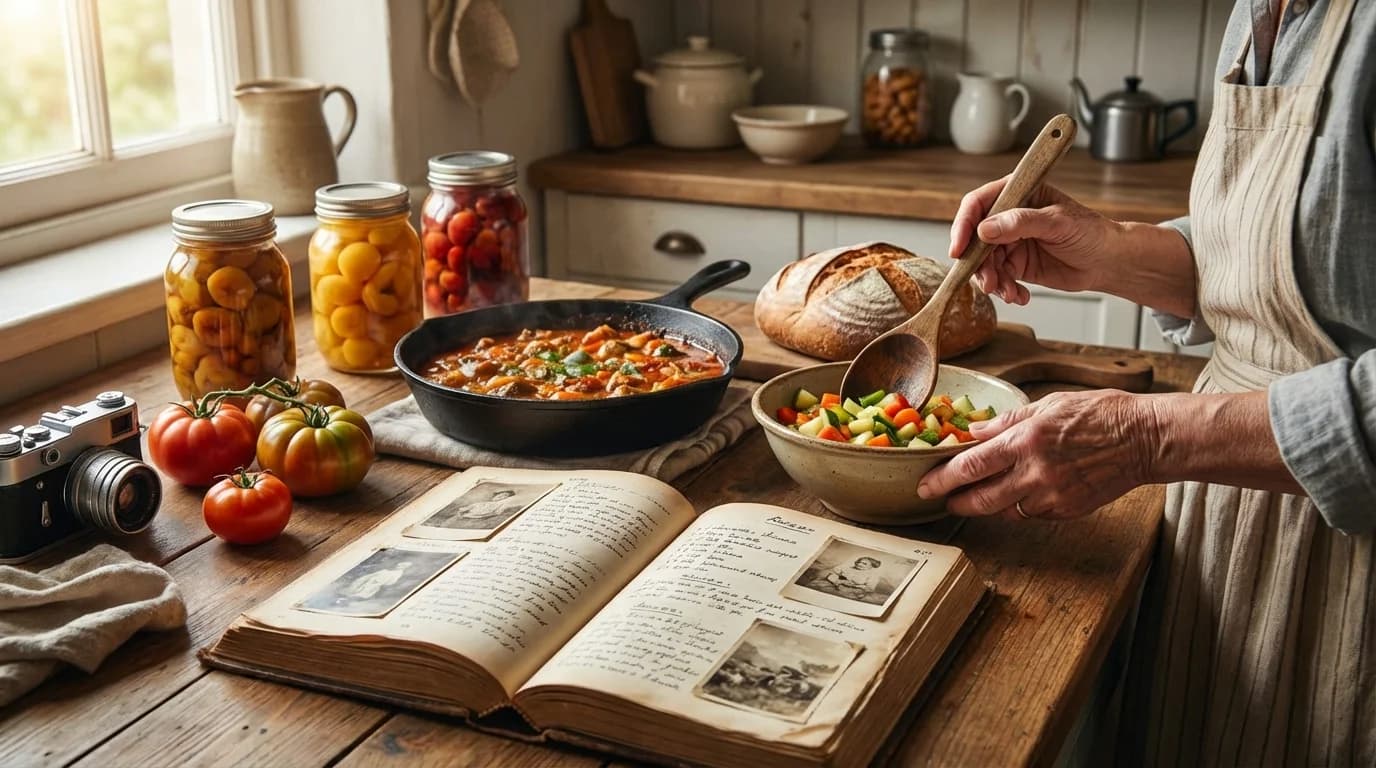
I knew my grandmother's pierogi recipe by heart—the dough, the filling, the precise crimping technique. What I didn't know until I started researching our family food history was that her recipe was a Polish-American hybrid, adapted from her mother's version when she couldn't get fresh farmer's cheese in Pittsburgh in the 1940s, which itself had been modified from the original recipe her grandmother brought from a small village in Poland in 1895.
That single recipe held four generations of adaptation, two continents, one world war, an immigration journey, and the resourcefulness of women making do with what they had. But without documentation, those layers of history would have been lost, leaving just the recipe with no understanding of its remarkable journey.
Documenting your family's food history transforms simple recipes into rich narratives of who your family is, where they came from, and how food shaped their identity. This guide will show you how to research, document, and preserve your family's complete culinary story.
What is Family Food History?
Family food history is the story of your family told through food.
Components of Food History
Recipes and Dishes:
- What your family ate and cooked
- How recipes were acquired and transmitted
- Variations and adaptations over time
- Signature family dishes
Cultural Context:
- Ethnic and regional food traditions
- Religious dietary practices
- Cultural celebrations and food rituals
- How tradition evolved in new contexts
Geographic Journey:
- Immigration stories
- Regional migrations
- How location influenced food
- Adaptation to new ingredients and markets
Economic History:
- How wealth/poverty shaped eating
- Depression-era adaptations
- Wartime substitutions
- Class and status through food
Social History:
- Gender roles in food preparation
- Family structure and meals
- Community and hospitality
- How family bonding happened around food
Personal Stories:
- Individual memories
- Family lore and anecdotes
- Turning points marked by food
- Character revealed through cooking
Why Document Food History?
Preserve Disappearing Knowledge:
- Elders won't be around forever
- Oral traditions fade in one generation
- Context is lost without documentation
- Once gone, it's unrecoverable
Understand Your Identity:
- Food connects you to ancestry
- Reveals family values and priorities
- Shows adaptation and resilience
- Grounds you in heritage
Give Meaning to Recipes:
- Transforms instructions into stories
- Provides cultural context
- Explains why dishes matter
- Makes cooking more meaningful
Create Legacy:
- Pass down complete heritage, not just recipes
- Give future generations their history
- Document your family's unique story
- Contribute to larger food history
Research Methods and Sources
Primary Sources (Firsthand Accounts)
Family Interviews: The most valuable source for food history.
Who to Interview:
- Oldest living relatives (highest priority)
- All generations
- Extended family (aunts, uncles, cousins)
- Family friends who share food memories
- People who married into family (outside perspective)
Interview Questions:
About Their Experience:
- What are your earliest food memories?
- What did your family eat for everyday meals?
- What was reserved for special occasions?
- Who did the cooking in your household?
- Where did your family shop or source food?
- How did you learn to cook?
- What food traditions did your family have?
About Previous Generations:
- What do you know about how your parents/grandparents ate?
- What stories were told about food from before your time?
- What recipes were passed down?
- What food traditions came from the old country/previous home?
- How did food change when your family immigrated/moved?
About Specific Recipes:
- Where did this recipe come from?
- Has it changed over time? How?
- What occasions was it made for?
- Are there stories associated with it?
- What happened when someone tried to change it?
About Historical Context:
- How did the Depression affect what your family ate?
- What did you eat during wartime?
- How did holidays and celebrations involve food?
- What couldn't you get that you wanted?
- What substitutions did you make?
Interview Tips:
- Record audio or video (with permission)
- Take notes even while recording
- Let them ramble (tangents contain treasures)
- Ask follow-up questions
- Request demonstrations
- Multiple sessions (memories emerge over time)
- Look at photos together to trigger memories
Family Documents:
- Old cookbooks with annotations
- Handwritten recipe cards and notebooks
- Letters mentioning food
- Diaries and journals
- Shopping lists
- Restaurant menus saved
- Event programs with menus
Photos and Videos:
- Family gatherings with food visible
- Kitchen scenes
- People cooking
- Holiday tables
- Restaurants and locations
- Food packaging and advertising from different eras
Secondary Sources
Published Resources:
- Ethnic/regional cookbooks from relevant time periods
- Immigration history books
- Local history publications
- Church or community cookbooks
- Historical newspapers (food advertising, recipes)
Online Resources:
- Ancestry sites (census records show occupations, locations)
- Ellis Island database (immigration records)
- Historical recipe databases
- Digital newspaper archives
- Ethnic heritage organizations
- Regional historical societies
Cultural Research:
- Study food traditions of your ethnic background
- Research regional specialties from ancestral homes
- Learn about religious dietary laws
- Understand economic contexts (what was available/affordable)
Historical Context:
- Major events that affected food (wars, depression, shortages)
- Immigration waves and patterns
- Regional agriculture and products
- Technological changes (refrigeration, canning, etc.)
Physical Artifacts
Kitchen Objects:
- Inherited cooking equipment
- Special utensils or tools
- Dishware associated with particular meals
- Handwritten recipe cards
- Annotated cookbooks
Document These:
- Photograph from multiple angles
- Measure and describe
- Note condition and materials
- Research when it was made/used
- Record who owned it and how it was used
- Preserve any attached stories
Organizing Your Research
Creating a Food Family Tree
Structure Your Documentation:
Generational Approach:
Great-Grandparents' Generation
├── What they ate (based on region, era, economics)
├── Their signature dishes
├── Food traditions they maintained
└── How they cooked (equipment, methods)

Grandparents' Generation
├── What they inherited
├── What they adapted
├── New influences (immigration, marriage, location)
└── What they passed down

Parents' Generation
├── Continued traditions
├── Modern adaptations
├── Fusion and innovation
└── What they're transmitting

Your Generation
├── What you've preserved
├── How you've adapted
├── New traditions you're creating
└── What you'll pass forward
Geographic Timeline:
- Original homeland → What they ate there
- Immigration journey → Food during transition
- First US/new location → Adaptation period
- Settling in → Establishment of new food patterns
- Current location → Present-day traditions
Recipe Evolution Charts: For important recipes, document:
- Original version (if known)
- First adaptation (why it changed, what changed)
- Subsequent modifications (each generation's changes)
- Current version(s)
- Multiple branches (different family members' versions)
Database or Documentation System
Spreadsheet Approach: Create comprehensive database with columns:
- Recipe/Dish Name
- Source/Origin
- Generation First Made
- Geographic Location
- Cultural Context
- Occasions
- Modifications Over Time
- Current Status (still made? lost? adapted?)
- Associated Stories
- People Most Connected To
- Photos/Documentation
Narrative Approach: Write your family's food history as story:
- Chronological narrative
- Character-driven (following specific ancestors)
- Thematic (immigration experience, holiday traditions, etc.)
- Combines research with storytelling
Digital Archive: Use myrecipe.app or similar to:
- Store recipes with full historical context
- Attach photos and documents
- Create tags by generation, culture, occasion
- Link related recipes
- Build searchable family food archive
- Share with extended family
Physical Archive:
- Binders organized by generation or theme
- Archival storage for original documents
- Photo albums with detailed captions
- Printed family food history book
Writing Your Family Food History
Narrative Techniques
Start with Specific Stories: Don't begin with generalities—start with a story:
"In 1932, my grandmother was 8 years old when her father lost his job at the steel mill. That's the year she learned to make pea soup, a skill that would define her cooking for the next 70 years. The recipe was simple—dried peas, ham bone, onion, whatever vegetables the neighbors traded—but it kept her family fed through the Depression..."
Use Sensory Details:
- How things smelled, tasted, looked, felt, sounded
- Physical descriptions of kitchens, tables, ingredients
- Specific details that bring scenes alive
- Direct quotes from interviews
Connect Personal to Historical:
- Link family experiences to larger events
- Show how history affected individual lives
- Provide context for why things were as they were
- Make the personal universal
Include Multiple Perspectives:
- Different family members' memories of same events
- Note contradictions (they're interesting!)
- Show how stories change in retelling
- Present complexity honestly
Preserve the Authentic Voice:
- Use direct quotes from interviews
- Maintain speech patterns and language
- Include ethnic terms and phrases
- Don't "clean up" too much—authenticity matters
What to Document
For Each Significant Recipe or Food Tradition:
Origin Story:
- Where did it come from originally?
- How did it enter your family?
- Who first made it?
- Why did it become important?
Cultural Context:
- Ethnic/regional background
- Religious significance
- Social class indicators
- Historical period
Evolution:
- How has it changed over time?
- Why did it change?
- Who made the changes?
- What stayed constant?
Memories and Stories:
- Specific incidents involving this dish
- Funny or touching anecdotes
- Conflicts or disagreements about it
- Why family members love or hate it
Current Status:
- Still made regularly?
- Only for special occasions?
- Lost and being reconstructed?
- Adapted beyond recognition?
- Multiple competing versions exist?
Future:
- Who's learning to make it now?
- Will it continue?
- How might it evolve?
Special Research Areas
Immigration Food Stories
Document the Journey:
- What foods could they bring?
- What did they eat during travel?
- First meals in new country
- Where they found familiar ingredients
- What they couldn't get anymore
- How they adapted traditional dishes
Adaptation Process:
- Substitute ingredients (what replaced what)
- Modified techniques
- Fusion creations
- Maintaining tradition vs. assimilating
- Generational differences in adaptation
Cultural Preservation Through Food:
- Which dishes remained most authentic?
- What was considered non-negotiable?
- How food maintained ethnic identity
- Role of food in cultural community
Regional Food Traditions
Document Local Food Culture:
- Regional specialties your family made
- How region's agriculture influenced eating
- Local markets and sources
- Seasonal patterns
- How food reflected regional identity
Migration Effects:
- What changed when family moved regions?
- What regional foods they brought with them?
- What new regional foods they adopted?
- How geography shaped their cooking?
Economic History Through Food
Class and Status:
- What "special occasion" foods indicated about status?
- How economic changes affected diet?
- "Company food" vs. everyday meals
- Aspirational foods (what they wanted to afford)
Hard Times:
- Depression-era adaptations
- Wartime rationing and substitutions
- Stretching meals to feed more
- Making do with less
- Pride and shame around food scarcity
Prosperity:
- How improved circumstances changed eating
- New foods they could afford
- Technology adoption (freezers, appliances)
- Restaurant dining patterns
Women's History Through Food
Domestic Labor:
- Who did the cooking (always women? servants? family?)
- Time spent on food preparation
- Skill transmission mother to daughter
- Kitchen as women's domain
Changing Roles:
- Women working outside home
- Convenience foods adoption
- Technology's impact
- Men cooking (when, why, how received)
- Feminist perspectives on domestic work
Power and Identity:
- Cooking as creativity and expression
- Kitchen as power center
- Food as nurture and control
- Women's expertise and knowledge
Creating the Final Product
Family Food History Book
Contents:
- Introduction: Your family's food story overview
- Generational chapters or thematic sections
- Recipes with full historical context
- Photos and documents throughout
- Family tree showing food connections
- Timeline of major food events
- Interviews (excerpted or full transcripts)
- Appendices: Resources, research notes
Format Options:
- Professionally printed book (Blurb, etc.)
- Self-published volume
- Digital ebook
- Website or blog
- Combination print and digital
Digital Archive
Comprehensive Online Resource:
- Website with family food history
- Digital family cookbook
- Photo galleries
- Audio/video interviews
- Downloadable documents
- Searchable database
Platform Options:
- myrecipe.app for recipe organization with historical notes
- WordPress or Squarespace for full website
- Google Sites for simple family site
- Private family wiki
- Shared cloud folder with organized files
Presentations and Sharing
Family Reunion Presentation:
- Slideshow of food history discoveries
- Tasting of historical recipes
- Interview excerpts (audio/video)
- Q&A with researchers
- Distribution of preliminary findings
Ongoing Blog or Newsletter:
- Regular posts about food history discoveries
- "Recipe of the month" with full history
- Updates on research progress
- Requests for family input
- Building engagement
Educational Outreach:
- Sharing with schools or historical societies
- Contributing to ethnic heritage organizations
- Publishing excerpts
- Presenting at local history events
Involving the Family
Collaborative Research
Assign Roles:
- Interviewer
- Photographer
- Transcriber
- Recipe tester
- Document organizer
- Writer/editor
- Designer
Family Research Days:
- Gather to go through old photos together
- Group interview of eldest members
- Collective recipe testing
- Story sharing sessions
Distributed Research:
- Different branches research their lines
- Geographic distribution (someone in each location)
- Generational participation
- Compile all findings
Preserving Multiple Perspectives
Recognize Differences:
- Different family members remember things differently
- Multiple versions of "the truth" exist
- Conflicts and disagreements are part of history
- Present complexity honestly
Include Dissenting Views:
- Not everyone loved Grandma's cooking (that's interesting!)
- Family food conflicts are significant
- Preferences and dislikes matter
- Rebellions and innovations tell stories too
Ethical Considerations
Respecting Privacy
Sensitive Topics:
- Poverty and hunger
- Alcoholism or substance abuse
- Divorce or family conflict
- Mental health issues
- Shame around ethnic background or class
Get Permission:
- Ask before recording
- Check before sharing stories publicly
- Respect wishes about what's private
- Consider impact on living family members
Cultural Respect
Appropriation vs. Appreciation:
- Give proper credit to cultural origins
- Don't claim others' heritage as your own
- Explain what's family tradition vs. adopted practice
- Research cultural context accurately
Accurate Representation:
- Don't romanticize or sanitize
- Acknowledge complexity and contradiction
- Research thoroughly before making claims
- Consult cultural experts when appropriate
Maintaining and Updating
Family Food History is Ongoing:
Regular Updates:
- Add new interviews as you conduct them
- Include recent photos and events
- Document how traditions continue or change
- Track current generation's innovations
Corrections and Additions:
- Family members will remember more after seeing initial work
- New documents and photos emerge
- Previous errors discovered
- Deeper research reveals new information
Next Generation's Role:
- Train younger family to continue documenting
- Pass down research skills
- Encourage their contributions
- Make it multi-generational project
The Gift of Documented History
When you document your family's food history, you're doing more than creating a cookbook or preserving recipes. You're:
- Honoring your ancestors' experiences
- Giving future generations their heritage
- Preserving stories that would otherwise be lost
- Creating meaning from everyday activities
- Connecting past, present, and future
That pierogi recipe means so much more when you know it carried your great-great-grandmother across an ocean, sustained your family through depression and war, and connected four generations of women who showed love through filled dough.
Your family's food history deserves to be told. Start today.
Ready to begin documenting your family's food history? Try myrecipe.app for free to create a comprehensive digital archive where recipes, stories, photos, and historical context come together in one searchable, shareable family food history collection.
About myrecipe
myrecipe helps families save, organize, and share their favorite recipes in one place. Plan meals, create shopping lists, and preserve your culinary traditions.
Start Organizing Recipes