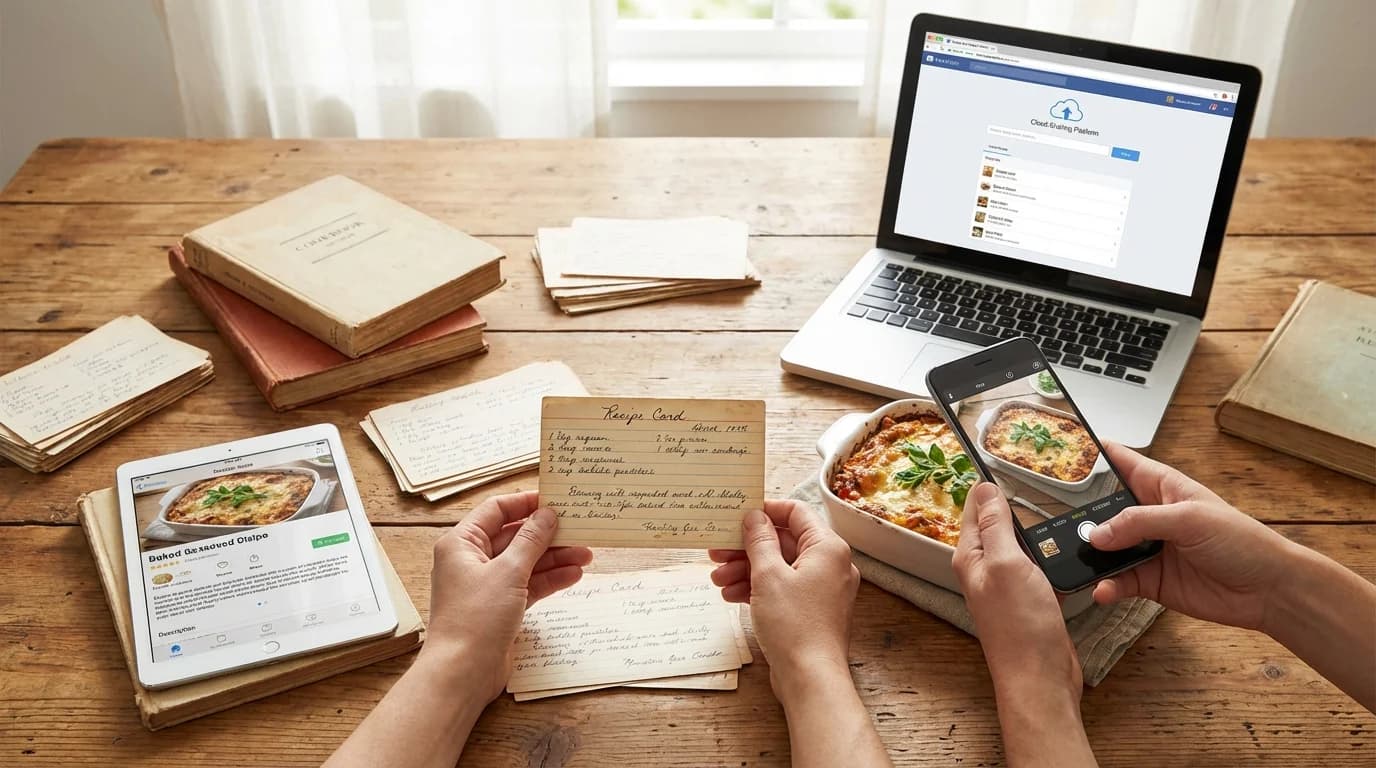
My family is scattered across three continents. When my grandmother passed away last year, we realized that her recipes—the ones that defined our family gatherings—existed on fragile cards in my aunt's kitchen in Ohio. Cousins in Australia had never tasted her pierogi. Relatives in Poland wanted to recreate the American dishes she'd adapted after immigrating.
We needed a way to share these precious recipes with family worldwide, preserve them safely, and allow everyone to contribute their own versions and memories. What we discovered transformed how our family connects: online recipe sharing brought us together around our shared culinary heritage, despite living thousands of miles apart.
If your family is spread across cities, states, or countries, sharing recipes online ensures everyone has access to your culinary traditions. This guide will show you how to do it safely, effectively, and in ways that bring your family closer together.
Why Share Family Recipes Online?
The benefits extend far beyond simple convenience.
Practical Advantages
Access Anywhere: Family members can view recipes from their phones, tablets, or computers—whether they're cooking in Seattle or Singapore.
Instant Updates: When someone perfects a recipe or discovers Grandma's secret technique, everyone gets the update immediately.
Never Lost: Recipes stored online with proper backups can't be destroyed by fire, flood, or misplacement.
Easy Distribution: No more photocopying recipe cards or trying to read handwriting over video calls.
Collaborative Building: Family members worldwide can contribute their recipes, creating a comprehensive family cookbook together.
Emotional Benefits
Connection Across Distance: Scattered families stay connected through shared food traditions.
Preserved Legacy: Recipes are protected for future generations, not just stored in one location.
Shared Memories: Comments, photos, and stories create a living archive of family food culture.
Inclusive Participation: Everyone can be part of preserving family heritage, regardless of geographic location.
Cultural Transmission: Younger generations access their cultural roots through food, even if they've never lived in the ancestral homeland.
Choosing the Right Platform
Different platforms serve different needs.
Recipe-Specific Apps (Recommended)
myrecipe.app (Our Top Pick):
- Privacy: Create private family collections only members can access
- Collaboration: Family members can add recipes, photos, comments
- Organization: Search, filter, tag recipes easily
- Accessibility: Works on all devices
- Sharing: Invite family with email, they create free accounts
- Features: Meal planning, grocery lists, recipe scaling
- Backup: Automatic cloud backup
- Cost: Free tier available
Why Recipe Apps Work Best:
- Built specifically for recipe sharing
- Privacy controls protect family recipes
- Recipe-specific features (scaling, meal planning, etc.)
- Easy for non-technical family members
- Professional, organized presentation
Cloud Storage Solutions
Google Drive:
- Pros: Free, familiar interface, collaborative, accessible anywhere
- Cons: Not optimized for recipes, requires manual organization
- Setup: Create shared folder structure by category
- Best for: Families comfortable with Google ecosystem
Dropbox:
- Pros: Reliable sync, selective sharing, good mobile apps
- Cons: Limited free space (2GB), not recipe-specific
- Best for: Small collections, tech-savvy families
iCloud:
- Pros: Seamless for Apple users, good integration
- Cons: Apple ecosystem only, limited cross-platform
- Best for: All-Apple families
Website/Blog Platforms
WordPress (Private):
- Pros: Full control, can be password-protected, professional
- Cons: Requires setup, hosting costs ($5-10/month), maintenance
- Best for: Large families wanting custom solution
Google Sites:
- Pros: Free, easy to set up, collaborative editing
- Cons: Basic design, limited features
- Best for: Simple family sites, one-time setup
Notion:
- Pros: Very flexible, beautiful layouts, free tier
- Cons: Learning curve, not recipe-specific
- Best for: Organized families who want customization
Social Media Groups (Use Cautiously)
Facebook Groups (Private):
- Pros: Familiar platform, easy photo sharing, comments
- Cons: Not organized, poor search, recipes get buried, privacy concerns
- Best for: Casual sharing, complementing main collection
WhatsApp/Telegram Groups:
- Pros: Real-time sharing, easy photos
- Cons: Terrible organization, impossible to find old recipes
- Best for: Quick recipe questions, not permanent storage
Why Social Media Isn't Ideal:
- Recipes get lost in conversation flow
- Difficult to organize and search
- Platform changes affect access
- Not designed for recipe archiving
- Privacy concerns with major platforms
Our Recommendation
For most families: Start with a recipe-specific app like myrecipe.app, then supplement with social media for casual sharing and discussion. Recipe apps provide structure, organization, and features specifically for recipes, while social media handles the social interaction.
Setting Up Your Family Recipe Collection
Follow these steps for successful online sharing.
Step 1: Choose Privacy Level
Fully Private:
- Only invited family members can view
- Recipes not visible to public
- Complete control over who has access
- Best for: Precious family heirlooms, secret recipes
Family-Only with Sharing:
- Private to family
- Members can share individual recipes with friends
- Collection stays private, individual recipes can be shared
- Best for: Mix of private and shareable recipes
Public with Credit:
- Family recipes shared publicly
- Properly attributed to family/creator
- Anyone can view and use
- Best for: Families wanting to share heritage publicly, potential blog/website
Hybrid Approach (Most Common):
- Main collection is private
- Selected recipes made public or shareable
- Family decides together which recipes to keep private
Step 2: Invite Family Members
Getting Buy-In:
- Explain the purpose (preservation, accessibility, connection)
- Show examples of what it will look like
- Address privacy concerns
- Make it easy to participate
- Emphasize this honors family heritage
Invitation Process:
- Send personalized invitations explaining the project
- Provide simple setup instructions
- Offer help for less tech-savvy members
- Give clear deadlines for initial contributions
- Make participation feel special, not obligatory
Managing Different Tech Comfort Levels:
- Offer one-on-one setup help via video call
- Create simple instructions with screenshots
- Assign tech-savvy family members as helpers
- Consider alternative contribution methods (email recipes to organizer)
- Be patient—some people need more time
Step 3: Organize Your Collection
Category Structure: Common organization:
Family Recipes/
├── Grandma Helen's Collection/
├── Grandpa Joe's Specialties/
├── Mom's Kitchen/
├── Aunt Marie's Recipes/
├── Cousins' Contributions/
├── Holiday Traditions/
├── Regional Specialties/
└── Modern Adaptations/
Tagging System:
- By family member (source)
- By generation
- By cultural origin
- By occasion (holidays, everyday, special)
- By dietary needs
- By difficulty level
Naming Conventions:
- Include source: "Grandma's Apple Pie" not just "Apple Pie"
- Be specific: "Ukrainian Pierogi (Grandma Helen's Version)"
- Preserve original names even if unusual
- Add translations for non-English names
Step 4: Add Content Richly
More Than Just Ingredients:
Essential Elements:
- Complete recipe with measurements
- Clear instructions
- Source attribution
- Date (when created or acquired)
Valuable Additions:
- Photo of finished dish
- Photo of original recipe card or person who made it
- Story about the recipe's origin
- Memories associated with the dish
- Family members' comments and variations
- Cultural or historical context
- Tips from the original cook
- Common mistakes to avoid
Multimedia Enhancement:
- Videos of family members demonstrating techniques
- Audio recordings of relatives sharing stories
- Historical photos from family gatherings
- Photos of ingredients or process steps
This transforms recipes from instructions into family narratives.
Best Practices for Online Recipe Sharing
Contribution Guidelines
Set Clear Expectations:
- What information should each recipe include?
- Photo requirements (encouraged but optional?)
- How to attribute sources
- Approval process (if any)
- Editing permissions (who can modify what?)
Create Recipe Template: Provide standard format:
Recipe Name:
Source (who it's from):
Date Acquired:
Servings:
Time Required:

Ingredients:
[List]

Instructions:
[Steps]

Notes and Stories:
[Context, memories, tips]

Contributed by: [Your name]
Date Added: [Date]
Consistency makes the collection professional and usable.
Moderation and Quality Control
Review New Additions:
- Assign family member(s) to review submissions
- Check for completeness
- Verify recipe makes sense
- Ensure appropriate content
- Maintain quality standards
Handling Duplicates: Multiple versions of "the same" recipe often exist:
- Include all versions
- Note differences: "Grandma's original" vs. "Mom's adaptation"
- Let family vote on favorites
- Document evolution of recipes through generations
Editing Protocols:
- Original contributor can always edit their recipes
- Others can suggest edits (comments/notes)
- Admin can make corrections for clarity
- Major changes should be discussed
- Preserve original versions before major edits
Privacy and Security
Protecting Family Recipes:
- Use platforms with strong privacy settings
- Regularly review who has access
- Remove access for non-family members who shouldn't have it
- Consider which recipes should remain family-only forever
- Be cautious about public sharing of true secret recipes
Respecting Recipe Origins:
- Always credit the family member who contributed
- Note if recipe originally came from outside family (cookbook, friend, etc.)
- Don't claim others' recipes as family creations
- Respect wishes if someone doesn't want their recipe shared widely
Copyright Considerations:
- Family recipes created by your family: Generally okay to share within family
- Recipes from published cookbooks: Legally copyrighted, use for private family use only
- Adapted recipes: Note original source, okay to share your adaptation privately
- Celebrity chef recipes: Don't share publicly without permission
Engaging Family Members
Make it a living, active collection.
Regular Activities
Monthly Recipe Challenge:
- Each month, everyone makes the featured family recipe
- Share photos of results
- Compare notes and variations
- Vote on best presentation
Recipe of the Week:
- Highlight different recipe each week
- Share in family group chat
- Include story or memory
- Encourage family to make it
Seasonal Collections:
- Create holiday recipe collections
- Summer grilling favorites
- Fall comfort foods
- Birthday traditions
Family Cooking Events:
- Virtual cooking dates where everyone makes same recipe
- Video call while cooking together
- Great for holidays apart
- Record and add to collection
Encouraging Contribution
Make It Easy:
- Simple submission process
- Accept recipes in any format (even photos of handwritten cards)
- Offer to help format and upload
- Acknowledge every contribution publicly
Recognition:
- Thank contributors
- Highlight new additions
- Create "contributor of the month"
- Include contributor photos
- Make people feel valued
Storytelling Prompts: Ask questions to generate content:
- What's your earliest memory of this dish?
- Who taught you to make this?
- What occasion is this served at?
- What makes this recipe special?
- Have you adapted it? How?
Building Community
Comments and Interaction:
- Enable comments on recipes
- Encourage family to share experiences making recipes
- Post photos of their results
- Share modifications that worked
- Ask questions and give tips
Family Food History:
- Create timeline of family food traditions
- Document how recipes came into family
- Record immigration stories connected to food
- Preserve culinary traditions being lost
Cross-Generational Connection:
- Younger members can ask questions of elders
- Elders share wisdom and techniques
- Everyone contributes to preservation
- Creates dialogue across age gaps
Maintaining the Collection
Regular Updates:
Weekly (If Active Community):
- Add new recipes
- Respond to comments
- Share photos of family cooking
Monthly:
- Review new contributions
- Update categories or tags
- Share collection highlights
- Encourage participation
Quarterly:
- Verify backups
- Review privacy settings
- Check in with inactive family members
- Plan special features or events
Annually:
- Comprehensive review of entire collection
- Update outdated information
- Remove inactive members if necessary
- Consider creating printed version
- Celebrate growth and participation
Backup Strategy
Even cloud-based platforms need backup plans:
Primary Storage: Recipe app or chosen platform
Secondary Backup:
- Export recipes periodically to PDF or text files
- Store in different cloud service (Google Drive if using recipe app, etc.)
- Keep offline copy on external drive
Distributed Backup:
- Multiple family members have copies
- If one person loses access, others have it
- Reduces single point of failure
Important:
- Back up regularly (quarterly minimum)
- Test backups (make sure you can actually access/restore)
- Update backup when major additions occur
Special Situations
International Families
Language Considerations:
- Include recipes in original language if possible
- Provide translations
- Note regional terms for ingredients
- Explain cultural context
Measurement Conversions:
- Provide both metric and imperial
- Note regional ingredient differences
- Explain substitutions for unavailable ingredients
Time Zones:
- Use scheduled posts for global accessibility
- Record cooking videos for async viewing
- Allow participation on individual schedules
Sensitive Family Dynamics
Divorced or Blended Families:
- Create separate collections if needed
- Or inclusive collection with clear boundaries
- Respect everyone's comfort levels
- Focus on food, not drama
Estranged Family Members:
- Consider whether to include them
- Can remove access if necessary
- Recipes are heritage, politics are separate
- Make decisions as family group
Deceased Family Members:
- Honor their recipes with special designation
- Share memories in comments
- Consider memorial recipe features
- Preserve their contributions permanently
Creating Printed Versions
Digital doesn't mean you can't have physical too.
When to Print
Special Occasions:
- Weddings (give newlyweds family cookbook)
- Graduations
- Milestone birthdays
- Family reunions
- Holidays
Archival Purposes:
- Backup in case digital access lost
- For family members who prefer physical
- Display piece for family home
- Library copy for reference
How to Print
Individual Recipes:
- Print as recipe cards
- Single-sheet format
- Give as gifts
Full Cookbooks:
- Use print-on-demand services (Blurb, Shutterfly, Lulu)
- Create PDF and print locally
- Professional binding
- Include photos and stories
Hybrid Approach:
- Maintain digital as master copy
- Print updated versions periodically
- Best of both worlds
Success Stories
The Global Italian Family: Scattered across US, Italy, and Argentina, they created a shared recipe collection that documented how their family's recipes evolved in different countries. Each region contributed their variations of classic recipes, showing culinary adaptation through immigration.
The Four-Generation Cookbook: Grandmothers in their 80s contributed scanned recipe cards, mothers added their adaptations, Gen X uploaded photos, and grandchildren (teens) created cooking videos. The collaborative project brought all generations together with technology meeting tradition.
The Heritage Preservation Project: An adopted child used online recipe sharing to connect with birth family. Through shared recipes and stories, she learned about her cultural heritage and built relationships with biological relatives through their shared food traditions.
Getting Started This Week
Day 1: Choose your platform
- Sign up for myrecipe.app or chosen service
- Create family account/collection
- Set privacy settings
Day 2: Create structure
- Set up categories
- Create recipe template
- Write contribution guidelines
Day 3: Add initial recipes
- Start with 5-10 important family recipes
- Include photos and stories
- Make it look inviting
Day 4-5: Invite family
- Send personal invitations
- Explain the project
- Provide simple instructions
Week 2+: Grow and maintain
- Add new recipes regularly
- Engage family members
- Respond to contributions
- Build the collection together
The Power of Shared Recipes
When you share family recipes online, you're doing more than distributing cooking instructions. You're:
- Keeping family connected across distances
- Preserving heritage for future generations
- Creating a living archive of family culture
- Building bridges between generations
- Honoring those who came before
- Giving family something tangible to share
That recipe for your grandmother's pierogi becomes a conversation starter, a connection point, a way to remember and celebrate. When your cousin in Australia makes it for the first time and shares a photo, you're not just sharing food—you're sharing identity, love, and continuity.
Your family's culinary heritage deserves to be preserved and shared. Start today.
Ready to create your family's online recipe collection? Try myrecipe.app for free and bring your family together through shared recipes, stories, and traditions, no matter how far apart you live.
About myrecipe
myrecipe helps families save, organize, and share their favorite recipes in one place. Plan meals, create shopping lists, and preserve your culinary traditions.
Start Organizing Recipes