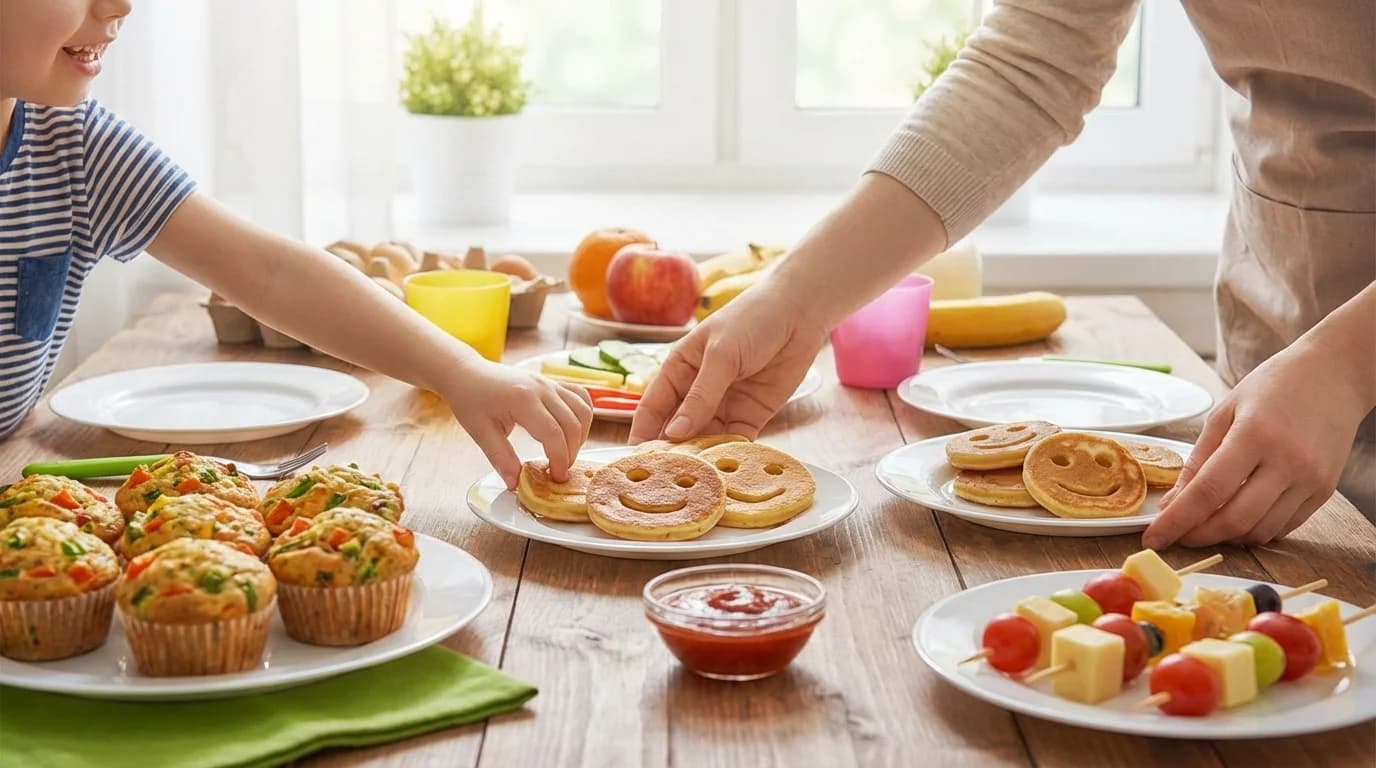
If you've cooked dinner only to watch your kid push it around the plate, you know picky eater recipes aren't about finding "the magic dish." They're about a system: predictable foods, no pressure, and quiet work over months. Force-feeding doesn't work. Hiding everything they hate doesn't work long-term either.
Key Takeaways
- **Picky eaters** aren't being difficult — most have legitimate sensory or developmental reasons
- Always include **one safe food** on every plate (rice, bread, fruit, cheese)
- Sauce on the side, vegetables visible, no pressure — three rules that change everything
- Repeated exposure (10-15 times) is what builds acceptance, not bargaining
- Save the wins to MyRecipe so you stop reinventing dinner every night
This guide is the parent-tested middle path: 25 recipes that work for most picky eaters, the rules that build acceptance, a 5-day plan, and the workarounds when it's just plain bad.
Why Kids Are Picky (It's Not Your Fault)
Real reasons:
- Sensory sensitivity — texture, smell, or color is overwhelming
- Bitter sensitivity — kids genuinely taste vegetables differently than adults
- Neophobia — biological wariness of unfamiliar foods (peaks ages 2-7)
- Control — eating is the one thing they fully control
- Genuine dislikes — adults have them too; kids are allowed to
Knowing the why helps. It's not personal. It's not failure. It's developmental.
The Three Rules That Change Everything
- One safe food per plate. Always something they will definitely eat (rice, bread, fruit, cheese). The plate is never threatening.
- Sauce on the side. Most kid food rejection is about texture/sauce. Plain food + dip = wins.
- Offer, don't pressure. Place the new food on the plate. They don't have to eat it. Repeated exposure is the long game.
That's the whole framework. Everything else is recipe specifics.
25 Picky Eater Recipes That Actually Work
Pasta and Noodles (5)
- Buttered noodles with parmesan — the universal safe food
- Spaghetti with mild marinara (kept on the side for the most picky)
- Mac and cheese (homemade or boxed)
- Pesto pasta (basil pesto first, then introduce others)
- Lo mein with butter and soy sauce (dial back soy)
Chicken-Based (5)
- Chicken nuggets (homemade, panko-crusted)
- Chicken tenders with dip on the side
- Plain grilled chicken with a side of rice
- Sheet-pan chicken with lemon (no herbs that frighten)
- Chicken quesadilla (just chicken + cheese)
Sandwiches and Pizza (5)
- Cheese pizza with thin crust
- PB&J (sunbutter for nut-free)
- Grilled cheese
- Cheese quesadilla
- Plain cheese tortilla rolled up
Hidden-Veggie Recipes (5)
- Hidden-veggie meatballs (grated zucchini, finely chopped spinach)
- Mac and cheese with puréed butternut
- Smoothies with spinach (the green is masked by berries)
- Carrot fries (sweet and crispy)
- Sweet potato pancakes
For more on this, see hidden vegetable recipes.
Build-Your-Own Bowls (5)
- Taco bar — kids assemble; they pick what goes in
- Pizza bar — sauce, cheese, toppings; kids build
- Pasta bar — pasta, butter, cheese, optional sauce, optional protein
- Rice bowl bar — rice, plain chicken, cheese, optional veggie
- Quesadilla bar — tortillas, cheese, optional fillings
Build-your-own is the picky-eater secret weapon. Kid-controlled = much higher buy-in.
A 5-Day Picky Eater Friendly Plan
| Day | Dinner | Adult version |
|---|---|---|
| Mon | Cheese quesadilla + plain rice + apple | Add chicken, salsa, hot sauce |
| Tue | Buttered pasta + parmesan + grapes | Add pesto + grilled chicken |
| Wed | Plain chicken tenders + dip + carrots + apple | Spice tenders + dip in buffalo sauce |
| Thu | Pizza night (build-your-own) | Same |
| Fri | Mini meatballs + plain marinara + bread | Same with cheese, peppers, herbs |
Same prep covers both kid and adult plates.
The "Safe Food" List
Every kid has a list of foods they 100% reliably eat. Build this list. Always have one of these on every dinner plate:
- White rice, plain pasta, plain bread, tortillas
- Cheese cubes, cheese sticks, shredded cheese
- Grapes, apple slices, banana, mandarin
- Plain chicken (no skin), plain ground meat
- Cucumber slices, plain carrots
- Hummus, ranch, ketchup, butter
Knowing this list = no plate is ever threatening.
How to Introduce New Foods (Without War)
The slow path:
- Place a small portion on the plate. No pressure to eat.
- Repeat for 10-15 dinners. Most kids accept after this many exposures.
- Pair with a safe food so the plate isn't fully foreign.
- Invite (don't force) a "no-thank-you bite" — one tiny bite, then they can stop.
- Praise tasting, not eating. Tasting is the win.
This isn't fast. It's effective.
When Hiding Vegetables Is Okay
Hidden vegetables (puréed into sauces, ground into meatballs) are a legitimate tactic — but pair them with visible vegetables on the plate. Kids who only get hidden vegetables don't learn to recognize and accept whole vegetables.
Goal: hidden + visible together.
What NOT to Do
- Don't bargain. "Three more bites and you can have dessert" trains kids that the food is bad enough to require payment.
- Don't punish. Sending them to bed hungry over food is associated with worse eating long-term.
- Don't praise eating. "Good girl for finishing!" makes eating about pleasing you, not appetite.
- Don't make a separate dinner. Same ingredients, different plates. They learn family eats together.
- Don't sneak everything. They never learn whole foods.
When to Worry (and See a Pediatrician)
Picky eating becomes a clinical concern when:
- The child eats fewer than 20 foods total
- They reject entire food groups (no fruits OR no proteins)
- They gag, vomit, or refuse meals consistently
- Growth is dropping on the chart
Talk to your pediatrician — sometimes there are sensory or oral-motor issues a feeding therapist can help with.
How Picky Eater Habits Improve Over Time
The good news: most kids broaden naturally between ages 8-12. The work in the toddler-to-elementary years is:
- Keep offering, no pressure
- Eat together at the table
- Don't let "I don't like that" become a label
- Let them help cook (massive buy-in builder — see cooking with kids ideas)
MyRecipe tip: Tag every recipe in MyRecipe with the kids' real reaction ("Sam ate", "Sam picky"). Filter to "Sam ate" when you need a guaranteed dinner. Open the dashboard.
Sample Sunday Cook for a Family With a Picky Eater
- 2 lbs chicken thighs (plain seasoning)
- 2 lbs ground beef (kid: plain meatballs; adult: taco filling)
- 4 cups rice
- Sheet pan: roasted vegetables (visible on adult plate, optional on kid plate)
- Sauces: marinara, ranch, salsa, cheese sauce
- Plain pasta and tortillas
This covers 4 dinners with kid + adult variations from the same prep.
FAQ
At what age does picky eating peak? Roughly ages 2-6. Most kids broaden by age 8-10.
Should I make a separate dinner for my picky kid? No — same ingredients, different presentation. Plain chicken + rice + cheese for them, full bowl for you. One cook, two plates.
Is it okay to bribe with dessert? Avoid bribes — they train kids to see vegetables as the bad part. Use "we eat all foods at the table" framing instead.
How long does it take to expand a picky eater's diet? Months to years, slowly. Repeated exposure (10-15 offerings of a new food) is the consistent winner.
Should I hide vegetables in food? Hidden vegetables are fine as part of the strategy — but pair with visible vegetables on the plate so kids learn whole foods.
My kid only eats chicken nuggets and pasta — should I be worried? If it's been 6+ months and they're not adding anything, talk to your pediatrician. Sometimes there's a sensory or feeding-therapy angle that helps.
What's the best book on picky eating? "How to Get Your Kid to Eat: But Not Too Much" by Ellyn Satter is the gold standard. Her division-of-responsibility framework underlies the rules in this guide.
Save Your Picky-Eater Wins in MyRecipe
The recipes that work get tagged. The next stressful week, you pull up "kid-approved" and dinner is decided. Try MyRecipe free.
About myrecipe
myrecipe helps families save, organize, and share their favorite recipes in one place. Plan meals, create shopping lists, and preserve your culinary traditions.
Start Organizing Recipes