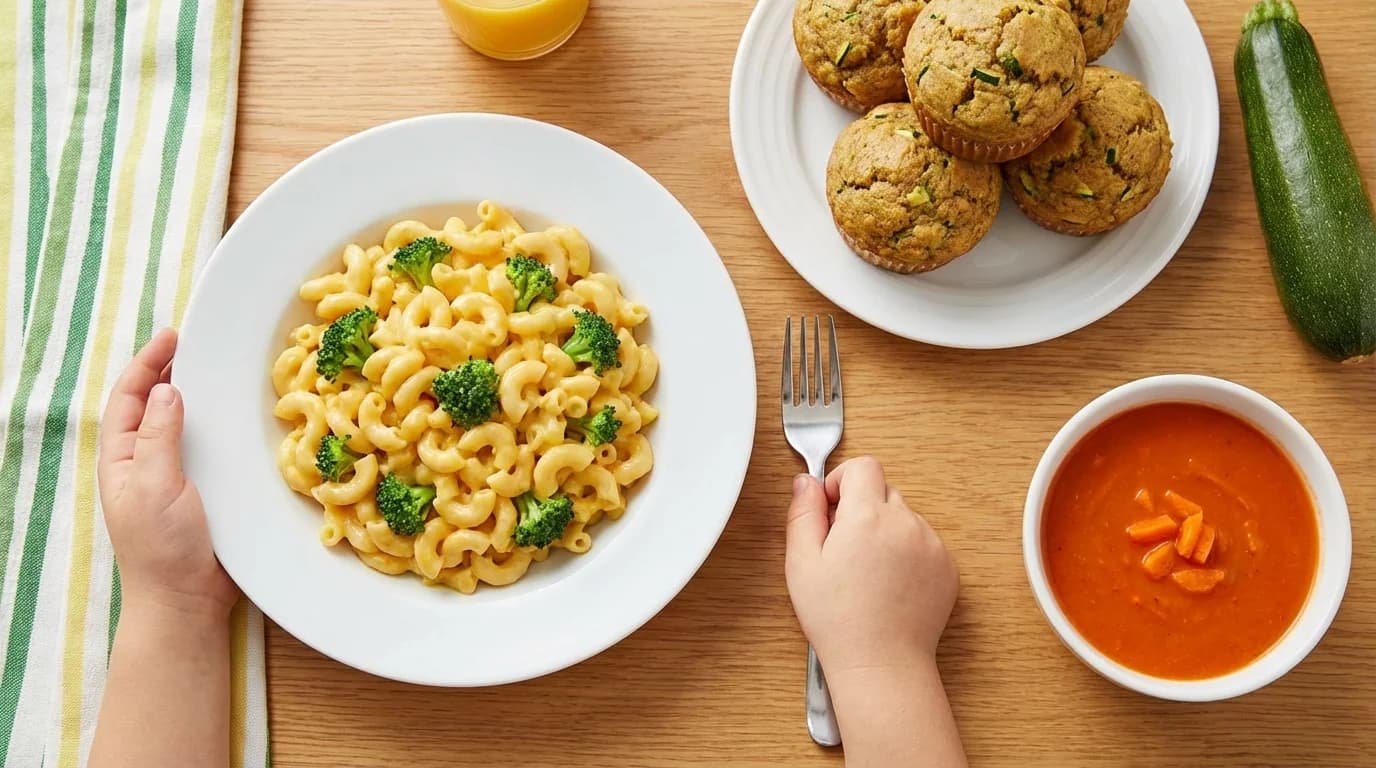
If your kid eats six foods total and one is mac and cheese, you're not alone. Hidden vegetable recipes are one tool in the picky-eater toolkit — they help close the nutrition gap while you keep offering visible vegetables and waiting out the picky phase.
Key Takeaways
- **Hidden vegetable recipes** work best when paired with visible vegetables — kids still need to learn whole foods
- Purée, grate, and finely chop are the three techniques; pick by the dish
- Don't hide more than 1/3 of the recipe's volume in vegetables — texture and flavor break
- Cauliflower, zucchini, spinach, and butternut squash are the easiest to disguise
- Save your hits in MyRecipe so the wins compound week over week
This guide gives you 20 hidden vegetable recipes that genuinely work, the techniques behind them, the ratios that don't break the dish, and the important caveat: hidden vegetables work best alongside visible ones, not instead of them.
The Three Hidden-Vegetable Techniques
Pick the right method per dish:
- Purée — for sauces, soups, mac and cheese, smoothies. Use a blender for ultra-smooth.
- Finely grate — for meatloaf, meatballs, muffins, pancakes. Adds moisture without visible flecks.
- Finely chop — for tacos, fried rice, casseroles. Texture is masked by other ingredients.
The Best Vegetables for Hiding
Easiest to disguise (mild flavor, blends in):
- Cauliflower — purées into mac and cheese, mashed potatoes, soup, smoothies (frozen)
- Zucchini — grates into meatballs, meatloaf, muffins, pancakes
- Butternut squash — purées into mac, sauces, baked goods
- Spinach — purées into pesto, smoothies, sauces (with strong flavors)
- Carrots — finely grates or purées into sauces
- Sweet potato — purées into mac, baked goods, pancakes
Harder to hide (strong flavor or texture):
- Broccoli (works in soup but cauliflower is easier)
- Bell peppers (purée into salsa, marinara)
- Mushrooms (finely chop into ground beef — best in tacos and bolognese)
20 Hidden Vegetable Recipes
Pasta and Sauces (5)
- Cauliflower mac and cheese — purée steamed cauliflower into the cheese sauce
- Hidden-veggie marinara — purée carrots, zucchini, spinach into store-bought sauce
- Butternut squash pasta — purée roasted butternut + butter + parmesan
- Spinach pesto — full bunch spinach, half basil, pine nuts, oil, parmesan
- Tomato-cauliflower soup — half tomato, half puréed cauliflower
Meatballs and Meatloaf (4)
- Hidden-veggie meatballs — grated zucchini + finely chopped spinach in ground beef
- Sweet potato meatloaf — grated sweet potato + carrot + onion
- Turkey meatballs with hidden cauliflower (riced)
- Mushroom-blend bolognese — finely chopped mushrooms blended with ground beef (50/50)
Smoothies (3)
- Spinach-berry smoothie — handful spinach + berries + banana + milk
- Avocado-mango smoothie — half avocado + mango + banana + milk
- Frozen-cauliflower berry smoothie — frozen cauliflower (mild!) + berries + yogurt
Muffins and Baked Goods (3)
- Zucchini muffins — grated zucchini in chocolate chip muffins
- Sweet potato pancakes — puréed sweet potato in batter
- Carrot apple muffins
Casseroles and Bowls (3)
- Hidden-veggie quesadilla — finely chopped spinach + cheese (kids see only cheese)
- Veggie-loaded fried rice — finely diced carrot, peas, bell pepper sautéed before egg
- Mac and cheese with butternut purée + breadcrumb topping
Snacks (2)
- Carrot fries — sweet, crispy, kid-approved
- Beet hummus — bright pink, fun, healthy
The Ratio Rule
Don't replace more than 1/3 of a recipe's volume with hidden vegetables. If you do:
- Mac and cheese gets watery and flavorless
- Meatballs fall apart
- Smoothies get bitter
- Muffins don't rise
Stay at or below 1/3 and the dish still tastes like the original.
Working ratios:
- Mac and cheese: 1 cup puréed cauliflower per 1 lb pasta + 2 cups cheese sauce
- Meatballs: 1 cup grated zucchini per 1.5 lbs ground beef
- Pasta sauce: 1 cup puréed mixed veg per 24 oz jar of marinara
- Muffins: 1 cup grated zucchini per dozen muffins
- Smoothies: 1 cup spinach per 2 cups other ingredients
Why Hidden Vegetables Aren't the Whole Answer
This is the part most "sneaky veggie" articles skip:
If kids only eat hidden vegetables, they never learn to recognize, accept, and choose whole vegetables. They become teenagers and adults who panic at salad.
The right strategy is hidden + visible together:
- Mac and cheese (with hidden cauliflower) served alongside roasted broccoli (visible, no pressure to eat)
- Hidden-veggie meatballs alongside a small dish of cucumber slices
- Smoothie alongside a bowl of grapes
Kids see the whole vegetable. They don't have to eat it. Over months, exposure builds acceptance. See picky eater recipes for the full strategy.
Step-by-Step: Cauliflower Mac and Cheese
The flagship hidden-veggie recipe.
Ingredients:
- 1 lb elbow pasta
- 2 cups cauliflower florets (steamed until very soft)
- 2 tbsp butter
- 2 tbsp flour
- 2 cups milk
- 2 cups shredded cheddar
- 1/2 cup parmesan
- Salt, pepper
Method:
- Boil pasta to al dente; drain.
- Steam cauliflower until fork-tender (8-10 min).
- Purée cauliflower in blender until ultra-smooth.
- Make a roux: butter + flour, cook 1 min.
- Whisk in milk slowly, simmer until thick.
- Off heat, stir in cheddar + parmesan + cauliflower purée.
- Fold in pasta. Salt to taste.
Optional: bake with breadcrumb topping for 15 min at 375.
Step-by-Step: Hidden-Veggie Meatballs
Ingredients:
- 1.5 lbs ground beef (80/20)
- 1 cup grated zucchini (squeezed dry in a clean towel — important!)
- 1/2 cup finely chopped spinach
- 1 egg
- 1/2 cup breadcrumbs
- 1/2 cup grated parmesan
- 2 cloves garlic, minced
- Salt, pepper
Method:
- Squeeze zucchini in a towel until water stops dripping.
- Mix all ingredients in a bowl until just combined (don't overmix).
- Form into 1.5-inch meatballs.
- Bake at 400F for 18-20 min on parchment.
- Serve with marinara over pasta.
Yield: ~24 meatballs. Freeze half for emergency dinners.
Tools That Help
- Microplane grater — for ultra-fine zucchini, carrot, garlic
- Food processor or blender — for smooth purées
- Mesh strainer or clean kitchen towel — for squeezing water from zucchini
- Ice cube trays — freeze leftover purées (cauliflower, butternut) in 1-tbsp portions for future use
How to Build a Hidden-Veggie Habit
Start with one recipe a week. Pick the easiest:
- Week 1: Hidden-veggie marinara — just purée store-bought sauce with sautéed veggies.
- Week 2: Hidden-veggie meatballs.
- Week 3: Cauliflower mac and cheese.
- Week 4: Smoothie with spinach.
By month 2 you've doubled your kid's vegetable intake without a single argument.
MyRecipe tip: Tag your hidden-veggie wins with "kid-approved hidden veg" in MyRecipe. The next time you're meal planning and worried about nutrition, that filter pulls them up instantly. Open the dashboard.
FAQ
Should I tell my kid there are vegetables in their food? Eventually yes — when they're older and the dish is already accepted, mention it. "You ate carrots and you didn't even know!" builds confidence. Don't lie if asked directly when they're young; just say "there are lots of good things in this."
Will hidden vegetables make my kid not learn to eat whole veggies? If hidden is your only strategy, yes. Always pair hidden with visible vegetables on the plate so kids see whole foods.
Can I freeze hidden-veggie meatballs? Yes — bake, cool, freeze on a sheet, then bag. Reheat from frozen at 350F for 15 min.
Do hidden vegetables count toward my kid's daily intake? Yes — nutrients are nutrients. But the social/skill side of eating whole vegetables matters too. Use both.
What if my kid notices the hidden vegetable? Smaller portion next time, or a different vegetable. Some kids have very sensitive taste/texture detection. Cauliflower is easiest; spinach is medium; broccoli is hard.
Can I hide vegetables in baked goods? Yes — zucchini muffins, sweet potato pancakes, carrot apple muffins all work. Don't tell yourself they're nutritious enough to count as breakfast every day, but they're a useful supplement.
Save Your Hidden-Veggie Wins in MyRecipe
Each time a hidden-veggie recipe lands, save it. Tag it. Build a quietly-nutritious dinner library. Try MyRecipe free.
About myrecipe
myrecipe helps families save, organize, and share their favorite recipes in one place. Plan meals, create shopping lists, and preserve your culinary traditions.
Start Organizing Recipes