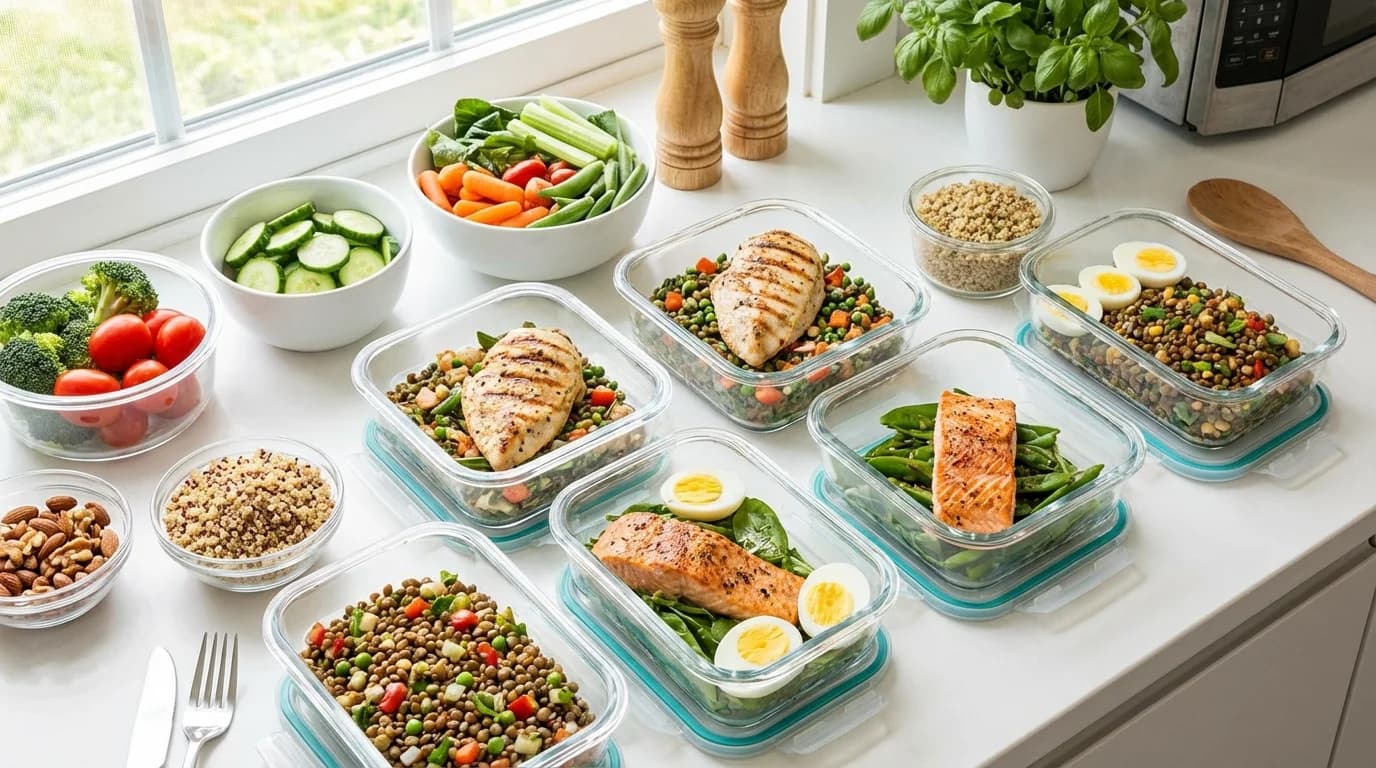
If you've tried to hit 130-150g of protein a day on takeout and snacks, you already know it's nearly impossible. High-protein meal prep is how athletes, busy parents, and anyone with a protein target actually gets there — by building meals that hit 30-50g each instead of cramming 60g into dinner while running on protein deficit all day.
Key Takeaways
- Aim for 0.7-1g protein per pound of body weight spread across 3-4 meals
- Stack two protein sources per meal (e.g. chicken + Greek yogurt sauce) to hit 40g easily
- Cottage cheese, Greek yogurt, eggs, and lentils are the cheapest protein sources
- Pre-cooked chicken thighs, hard-boiled eggs, and cooked lentils are your high-protein bases
- The variety problem is solved by rotating sauces and cuisines, not proteins
This guide gives you the protein math, the cheapest sources, the two-source stacking trick, a 7-day high-protein meal plan, 25 recipe ideas, and a full shopping list. No protein powder required, though it's in the budget swaps section if you want it.
The Protein Science You Actually Need to Know
Protein is the macronutrient that does the most structural work in the body — building and maintaining muscle, supporting immune function, keeping you full longer than carbs or fat. The reason everyone from gym-goers to postpartum parents to older adults is prioritizing protein right now is that the research on muscle preservation has become very clear: if you want to maintain muscle mass (especially during weight loss or aging), protein intake matters a lot.
How much do you need?
| Goal | Target (per lb body weight) |
|---|---|
| Sedentary adult, maintenance | 0.5-0.6g |
| Active adult | 0.7-0.8g |
| Building muscle | 0.9-1.0g |
| Weight loss (preserving muscle) | 0.8-1.0g |
| Older adults (60+) | 0.7-0.9g |
For a 170-lb person aiming to build muscle: approximately 153g per day. Spread across 4 meals = 38g per meal. That's your target.
Why distribution matters more than total. Protein synthesis — the process of building new muscle tissue — is most efficient when protein is distributed across multiple meals rather than consumed in one large dose. Eating 150g of protein in one meal doesn't produce 3x better results than eating 50g. Space it across 3-4 meals for the best utilization.
What "30g of protein" actually looks like:
- 4 oz cooked chicken breast: 35g
- 4 oz cooked salmon: 25g
- 1 cup cooked lentils: 18g
- 3 large eggs: 18g
- 1 cup Greek yogurt (whole milk): 17g
- 1 cup cottage cheese: 25g
- 4 oz tofu (firm): 10g
- 1 cup cooked chickpeas: 15g
Single sources rarely hit 30g alone. That's where stacking comes in.
The Two-Source Protein Stacking Method
The single most useful tactic in high-protein meal prep: stack two protein sources in every meal. This doubles your ceiling without doubling your portion size.
Examples that hit 38-50g per meal:
| Source 1 | Source 2 | Combined Total |
|---|---|---|
| 5 oz chicken thigh (33g) | 1/2 cup Greek yogurt sauce (12g) | 45g |
| 4 oz salmon (25g) | 1/2 cup cottage cheese salad (14g) | 39g |
| 3 large eggs (18g) + 1 oz cheese (7g) | 1/2 cup black beans (7g) | 32g |
| 1 cup Greek yogurt (17g) | 1 scoop protein powder (20g) | 37g |
| 5 oz ground turkey (35g) | 1 oz feta (5g) | 40g |
| 1 cup lentils (18g) | 2 eggs (12g) | 30g |
Once you internalize this principle, hitting protein targets starts to feel automatic rather than like a math problem at every meal.
High-Protein Sources Ranked by Cost (Per 20g Protein)
Budget and protein goals are fully compatible. The most affordable protein sources are often the best for meal prep:
- Eggs — approximately $0.50 per 20g protein
- Cottage cheese — approximately $0.75 per 20g
- Greek yogurt (plain, whole milk) — approximately $0.85 per 20g
- Dry beans, lentils, chickpeas — approximately $0.60-0.90 per 20g
- Chicken thighs (boneless, skinless) — approximately $1.20 per 20g
- Ground turkey or beef (90/10) — approximately $1.50 per 20g
- Canned tuna or salmon — approximately $1.50-1.75 per 20g
- Tofu or tempeh — approximately $1.80 per 20g
- Whey protein powder — approximately $1.80-2.00 per 20g
- Fresh salmon, shrimp — approximately $3.00-4.00+ per 20g
The budget strategy: Build the base of your week around eggs, cottage cheese, Greek yogurt, beans, and chicken thighs. Add fresh fish or shrimp once a week as a treat. Skip protein bars — they're the most expensive protein per gram and the least satiating.
25 High-Protein Meal Prep Recipes
Protein Bowls (8)
1. Greek Chicken Bowl 5 oz chicken thigh (roasted with oregano and lemon) over orzo, with tzatziki (made with Greek yogurt) and crumbled feta. Protein: approximately 50g. The tzatziki alone contributes 10-12g from the yogurt base.
2. Salmon Rice Bowl 4 oz roasted salmon over jasmine rice with edamame and a cottage cheese cucumber salad (cottage cheese + diced cucumber + dill + lemon). Protein: approximately 42g. The cottage cheese salad is the secret stacking move.
3. Buffalo Chicken Bowl 5 oz shredded chicken tossed in buffalo sauce over quinoa. Greek yogurt blue cheese dressing on the side (equal parts Greek yogurt and blue cheese crumbles). Protein: approximately 48g.
4. Korean Beef Bowl 4 oz ground beef (90/10) cooked with soy sauce, garlic, ginger, and sesame oil, over jasmine rice with 2 fried eggs, kimchi, and sliced cucumber. Protein: approximately 44g.
5. Tofu Power Bowl 6 oz extra-firm tofu (pressed and baked at 400°F until crispy) over brown rice with edamame, roasted broccoli, and tahini-miso dressing. Protein: approximately 38g. Stack with a side of Greek yogurt-based dip for another 10g.
6. Mediterranean Grain Bowl 5 oz chicken thighs over farro, with chickpeas, roasted red peppers, feta, and lemon-herb dressing. Protein: approximately 52g. The chickpeas are the second protein source.
7. Breakfast Power Bowl 2 scrambled eggs + 1/2 cup cottage cheese + 1/2 cup berries + 2 tablespoons hemp seeds. 5 minutes prep, 30-36g protein, holds well in the fridge for 3 days.
8. Tex-Mex Burrito Bowl 5 oz chicken thigh over cilantro-lime rice with black beans, roasted corn, and Greek yogurt (as a sour cream replacement that doubles the protein). Protein: approximately 45g.
Egg-Based Prep (4)
9. Egg Muffins (makes 12) Whisk 8 eggs with 4 oz diced turkey sausage, 1/2 cup shredded cheese, diced bell pepper, and salt. Pour into greased muffin tins. Bake at 375°F for 18-20 minutes. 2 muffins = approximately 24g protein. Store 5 days in fridge, reheat 45 seconds in microwave.
10. Frittata (4 servings) 6 eggs + 4 oz turkey sausage + 1 cup shredded cheese + spinach + diced onion. Start on stovetop, finish under broiler 3-4 minutes. Each quarter = approximately 28g. Stack with cottage cheese on the side for a 42g meal.
11. Breakfast Burritos (makes 8) 2 scrambled eggs per burrito + 1 oz sausage + 1 oz cheese + 2 tablespoons black beans. Wrap in foil. Freeze half, refrigerate half. Each burrito = approximately 32g protein. The most portable high-protein meal prep item.
12. Shakshuka with Feta Poach 2 eggs in spiced tomato sauce. Top with 1/4 cup crumbled feta. Serve with a 1/2 cup side of Greek yogurt. Total: approximately 30g. Freezer-unfriendly (eggs don't freeze) — make fresh each batch.
Pasta and Grain-Based (4)
13. Cottage Cheese Pasta Bake Blend 1 cup cottage cheese with garlic until smooth — use as the creamy sauce. Toss with cooked pasta, 4 oz ground turkey, cherry tomatoes, spinach, and Italian herbs. Bake at 375°F for 20 minutes. Per serving (of 4): approximately 38g protein. Reheats beautifully.
14. High-Protein Mac and Cheese Blend 1 cup cottage cheese into the cheese sauce — it adds protein and creaminess without affecting the flavor. Per serving: approximately 30g. Kid-friendly disguise for dairy protein.
15. Chicken Pesto Pasta 5 oz seared chicken thigh over penne with pesto, cherry tomatoes, and 2 tablespoons parmesan. Per serving: approximately 40g. Store sauce separately to prevent gumminess.
16. Beef Bolognese over Protein Pasta Slow-cooked ground beef bolognese over chickpea pasta (Banza) instead of regular pasta. The chickpea pasta adds approximately 14g protein per serving on its own. Total: approximately 44g per serving.
Salad Jars (4)
17. Chicken Caesar Salad Jars Layer: dressing at the bottom, chicken on top of dressing, parmesan, croutons, romaine last. Shake before eating. Dressing stays at the bottom until you're ready. 4-day shelf life if assembled this way. Protein: approximately 38g.
18. Tuna Nicoise Jars Layer: vinaigrette, canned tuna, halved green beans (blanched), 2 hard-boiled egg halves, sliced radish, cherry tomatoes, romaine. Protein: approximately 36g. Complete meal in a jar.
19. Cobb Salad Jars Layer: ranch dressing, chicken, hard-boiled eggs, bacon bits, avocado (add fresh), blue cheese, romaine. Protein: approximately 45g. The hardest to make look presentable, the most delicious.
20. Mediterranean Chickpea Salad Chickpeas + diced cucumber + tomatoes + feta + olives + red onion + parsley + lemon-olive oil dressing. 32-oz mason jar. Protein: approximately 28g. Stack with a 1/2 cup cottage cheese on the side to hit 42g.
Snacks and Bridges (5)
21. Cottage Cheese with Fruit and Granola 1 cup cottage cheese + 1/2 cup berries + 2 tablespoons granola. Protein: approximately 28g. Prep 5 jars on Sunday. Breakfast or snack all week.
22. Greek Yogurt with Protein Powder 1 cup Greek yogurt + 1 scoop vanilla protein powder + berries. Protein: approximately 37g. The most efficient protein-per-minute snack prep.
23. Hard-Boiled Eggs + String Cheese 6 hard-boiled eggs (batch on Sunday, peel and store in water) + 2 string cheese sticks. Protein: approximately 30g for the pair. Total prep: 12 minutes on Sunday.
24. Tuna Salad on Cucumber Slices 1 can tuna + 1 tablespoon mayo + Dijon + lemon + diced celery. Slice cucumber rounds as the vehicle. Protein: approximately 22g. Satisfying, very low carb, 5 minutes to prepare.
25. Edamame + Roasted Chickpeas 1 cup shelled edamame (steamed from frozen) + 1/2 cup roasted chickpeas (toss in oil, cumin, paprika; roast at 400°F for 25 minutes). Protein: approximately 22g. The most satisfying crunchy snack in the high-protein toolkit.
7-Day High-Protein Meal Plan (~150g Per Day)
This plan feeds one person at approximately 150g protein/day, distributed across 4 eating occasions. Adjust the plan up 50% for couples.
| Day | Breakfast (~35g) | Lunch (~40g) | Dinner (~50g) | Snack (~25g) |
|---|---|---|---|---|
| Mon | Egg muffins (2) + Greek yogurt | Greek chicken bowl | Korean beef bowl | Cottage cheese + fruit |
| Tue | Overnight oats + protein powder | Salmon rice bowl | Buffalo chicken bowl | Edamame + roasted chickpeas |
| Wed | Frittata slice + cottage cheese | Tex-Mex burrito bowl | Cottage cheese pasta bake | Hard-boiled eggs + string cheese |
| Thu | Breakfast burrito | Cobb salad jar | Chicken pesto pasta | Greek yogurt + protein powder |
| Fri | Egg muffins (2) + cottage cheese | Tuna nicoise jar | Mediterranean grain bowl | Tuna salad + cucumber |
| Sat | Flexible | Flexible | Flexible | Flexible |
| Sun | Cook day | Cook day | Cook day | Cook day |
Monday through Friday averages approximately 150g/day. Weekends are intentionally unstructured.
Sunday Cook Plan for the Full Week (3 Hours)
This plan produces everything in the 7-day table above:
Proteins (parallel cooking):
- 3 lbs chicken thighs: half Greek-seasoned, half buffalo. Sheet pan, 425°F, 22 minutes.
- 2 lbs ground beef (90/10): Korean bulgogi seasoning, stovetop 15 minutes.
- 1 lb salmon: sheet pan at 400°F, 14 minutes (cook on Tuesday, not Sunday).
- 12 egg muffins: bake while oven is hot from chicken.
- 8 hard-boiled eggs: boil while oven runs.
Grains (rice cooker + stovetop):
- 4 cups jasmine rice.
- 2 cups quinoa (stovetop, 15 minutes).
Sauces and dips (10 minutes total):
- Tzatziki: Greek yogurt + cucumber + dill + garlic + lemon.
- Greek yogurt blue cheese: 1/2 cup Greek yogurt + 2 oz crumbled blue cheese + squeeze of lemon.
- Buffalo sauce: store-bought, portioned into small containers.
Assemble jars (20 minutes):
- 3 salad jars (Caesar, Nicoise, Cobb).
- 5 cottage cheese + fruit jars.
- 4 Greek yogurt + fruit jars (hold off protein powder until eating).
Total active time: approximately 2.5 hours. Most of the first hour is hands-off oven time.
Budget Protein Swaps: Hit Your Targets Without Overspending
High-protein eating has a reputation for being expensive. It doesn't have to be. Here are the direct swaps that maintain protein targets while significantly reducing cost:
| Expensive | Budget Swap | Savings |
|---|---|---|
| Fresh salmon ($8-12/lb) | Canned salmon ($2-3/can, 25g protein) | 60-70% |
| Shrimp ($10-14/lb) | Canned tuna ($1.50/can, 22g protein) | 70-80% |
| Steak ($12-18/lb) | Chicken thighs ($3-4/lb) | 60-75% |
| Protein bars ($3-4 each) | Hard-boiled eggs + cottage cheese ($0.80) | 75% |
| Whey protein ($2/scoop) | Dry milk powder ($0.30/2 tbsp, 8g protein) | 85% |
| Greek yogurt (individual cups) | 32 oz tub, portioned at home | 40% |
| Pre-marinated proteins | DIY marinade (soy + garlic + honey = $0.20) | 80-90% |
For a full week hitting 150g protein per day, the difference between a budget-optimized plan and a premium-protein plan is approximately $30-40 per week for a single person. Eggs, cottage cheese, Greek yogurt, dry beans, and chicken thighs are where most of that savings lives.
Common Mistakes in High-Protein Meal Prep
Single-sourcing every meal. Using only chicken breast and nothing else produces bland, monotonous results that make people abandon the system by week 2. Rotate between chicken, eggs, beef, tofu, and legumes.
Ignoring dairy proteins. Cottage cheese and Greek yogurt are the most underrated meal prep proteins. They're cheap, versatile, fast (no cooking), and serve as both the base for a meal and the sauce. Treat them as proteins, not condiments.
Front-loading protein at dinner. If you eat 15g at breakfast, 20g at lunch, and 80g at dinner, your protein synthesis efficiency is much lower than if you distribute it evenly. Breakfast matters.
Neglecting fiber. High protein without enough fiber produces digestive discomfort. Pair every protein source with beans, vegetables, or whole grains. The fiber slows digestion, keeps you full longer, and supports gut health.
All chicken, all the time. Boredom kills consistency. If you ate chicken thighs 5 days in a row and have no interest in doing it again, the system failed. Build variety into the plan: two nights chicken, one night beef, one night eggs-based, one night fish or plant-based.
Skipping the stacking method. One protein source at 20-25g is fine. Two at 35-50g is sustainable. The stacking habit is what makes 150g/day feel effortless rather than like a constant uphill battle.
Shopping List for the 7-Day High-Protein Plan
Proteins:
- 3 lbs boneless skinless chicken thighs
- 2 lbs ground beef (90/10)
- 1 lb salmon (buy Tuesday if not Sunday-prepping)
- 32 oz cottage cheese (large tub)
- 32 oz Greek yogurt (plain, whole milk)
- 2 dozen eggs
- 1 block feta (6-8 oz), 1 bag shredded mozzarella
- 2 cans tuna
Grains and legumes:
- 3 cups jasmine rice
- 2 cups quinoa
- 1 can black beans, 1 can chickpeas
- 1 bag frozen edamame
Vegetables and produce:
- 2 heads broccoli, 2 bell peppers, 2 cucumbers, 1 pint cherry tomatoes
- 3 avocados
- Romaine or mixed greens (2 bags)
- 1 lemon, 4 limes, 1 head garlic, 1 bunch cilantro, fresh dill
Condiments:
- Soy sauce, sesame oil, tahini, hot sauce, buffalo sauce, olive oil, Dijon
Estimated weekly cost: $90-110 for one person. Drop to $70-80 by substituting canned salmon for fresh and leaning harder on eggs and cottage cheese.
Integrating With Your Meal Planner
The meal planning app makes high-protein meal prep easier to sustain week-over-week. Once you have your core rotation saved (Greek chicken bowl, salmon rice bowl, Korean beef bowl, cottage cheese pasta bake), you can deploy it in minutes rather than re-planning from scratch each Sunday.
Connect your meals to the shopping list generator so your Sunday grocery list auto-builds from the meal plan. Browse the recipe leaderboard for the most-saved high-protein recipes from the community.
FAQ
How much protein do I need to build muscle? About 0.9-1g per pound of body weight, distributed across 3-5 meals. Most adults need 140-180g per day for muscle building. The meals in this guide average 40-50g each, which makes hitting that target straightforward.
Can I do high-protein meal prep on a budget? Yes. Eggs ($0.50/20g protein), cottage cheese ($0.75/20g), Greek yogurt ($0.85/20g), dry beans ($0.60/20g), and chicken thighs ($1.20/20g) are all below $1.50 per 20g protein. A full 150g/day week can be done for $70-80.
Can I do high-protein meal prep as a vegetarian? Easily. Cottage cheese, Greek yogurt, eggs, tofu, tempeh, lentils, and chickpeas all stack to 30-50g per meal without any meat. Add a scoop of pea protein powder to yogurt for extra cushion. See the tofu power bowl, breakfast power bowl, and Mediterranean chickpea salad above.
How long does high-protein meal prep last in the fridge? 3-4 days for cooked proteins, 5 days for hard-boiled eggs in water, 5-7 days for Greek yogurt and cottage cheese jars. Freeze chicken and beef on day 1 if you won't eat it by Thursday.
What if I'm a parent and my family doesn't want a high-protein diet? Cook the same proteins in larger quantities, but build the rest of the family's plates around their preferences (buttered noodles, rice, bread). You eat your high-protein bowls while they eat their version. Same prep, different assembly. See the meal prep for a family of 4 guide for quantity and planning details.
Track Your Meals in MyRecipe
Add protein counts to each recipe's notes field. When you build your weekly meal plan, you can eyeball your daily total at a glance. Browse recipes by protein content, or sign up free to start building your high-protein rotation.
About myrecipe
myrecipe helps families save, organize, and share their favorite recipes in one place. Plan meals, create shopping lists, and preserve your culinary traditions.
Start Organizing Recipes