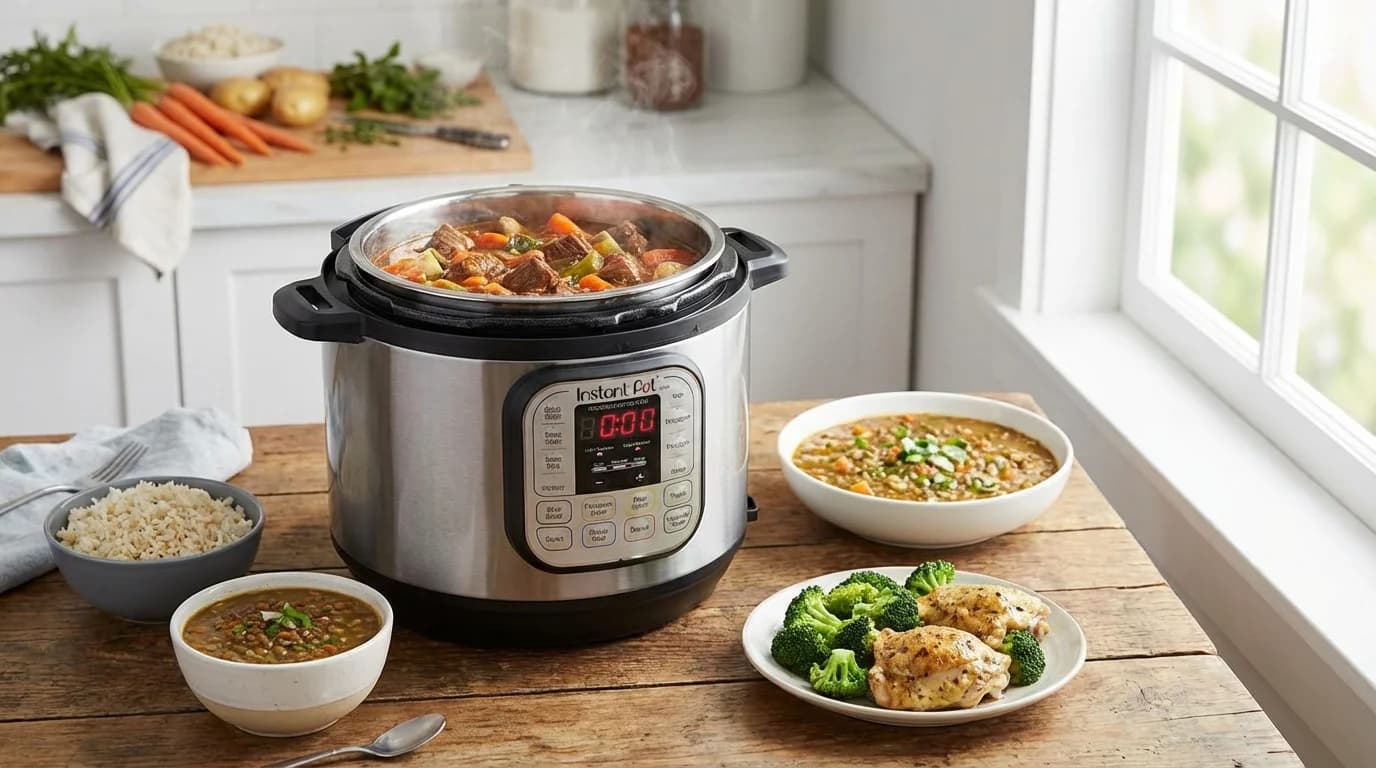
Your Instant Pot is still in the box. Or maybe you've used it once, got confused by the buttons, released pressure at the wrong time, and ended up with a kitchen full of steam and undercooked chicken. Now it sits in the cabinet, mocking you.
Key Takeaways
- Pressure cooking reduces cook time by 50-70% for tough cuts and grains
- Natural release is safer for most recipes—don't rush the process
- Always add enough liquid (at least 1 cup) or the pot won't pressurize
- Sauté function lets you build flavor before pressure cooking
- Perfect for meal prep: make large batches hands-off
The Instant Pot isn't complicated—it's just different. Once you understand how pressure cooking works, what the buttons actually do, and which recipes are foolproof for beginners, you'll wonder how you survived without it. Tender pulled pork in 60 minutes. Perfect rice without watching the stove. Beans from dry to done in 30 minutes.
In this guide, I'll walk you through exactly how the Instant Pot works, 25 beginner-friendly recipes, and the safety basics that prevent disasters.
How the Instant Pot Actually Works
An Instant Pot is an electric pressure cooker with multiple functions. The key feature is pressure cooking: the pot seals, steam builds pressure (10-15 PSI), and that high-pressure environment cooks food faster than traditional methods.
Why It Cooks Faster Under pressure, water boils at a higher temperature (around 250°F instead of 212°F). This higher heat penetrates food faster, breaking down tough fibers and cooking grains in a fraction of normal time.
Why It Makes Food Tender The combination of high heat, steam, and pressure breaks down collagen in tough cuts of meat (like pork shoulder or beef chuck) quickly. What normally takes 3-4 hours of slow cooking happens in 60-90 minutes.
The Functions You'll Actually Use
- Pressure Cook (Manual): The main function—set time and let it work
- Sauté: Browns meat, builds flavor before pressure cooking
- Rice: Automatic setting for perfect rice every time
- Slow Cook: Turns it into a slow cooker (rarely needed)
- Keep Warm: Automatically keeps food hot after cooking
Pressure Release: The Critical Part
This is where most beginners mess up. There are two ways to release pressure:
Natural Release (NPR) Let the pot sit after cooking finishes. Pressure drops gradually over 10-30 minutes. The float valve drops when it's safe to open.
Best for:
- Meats (prevents drying out)
- Soups and stews (prevents splattering)
- Grains (prevents mushiness)
- Anything with volume (beans, pasta)
Quick Release (QR) Manually turn the valve to "venting" immediately after cooking. Steam shoots out, pressure drops in 1-2 minutes.
Best for:
- Vegetables (stops cooking instantly)
- Seafood (prevents overcooking)
- Eggs (easier to peel)
Essential Instant Pot Rules
Follow these and you'll avoid 90% of beginner mistakes:
Rule 1: Minimum Liquid Requirement
The pot needs at least 1 cup of liquid (water, broth, sauce) to build pressure. Without enough liquid, you'll get a "burn" warning and the pot won't pressurize.
Rule 2: Don't Overfill
Fill to the "max" line only—usually 2/3 full for solid foods, 1/2 full for liquids or foods that expand (rice, beans, pasta).
Rule 3: Check the Sealing Ring
Before cooking, ensure the silicone ring is properly seated in the lid. If it's loose or missing, the pot won't seal and pressure won't build.
Rule 4: Set Valve to "Sealing"
The pressure valve on top must be set to "sealing" before cooking. If it's on "venting," pressure escapes and food won't cook.
Rule 5: Account for Pressure Build Time
Recipes list cook time under pressure, but add 10-15 minutes for the pot to build pressure first. Total time = pressure build + cook time + release time.
25 Easy Instant Pot Recipes
Rice and Grains (4 recipes)
1. Perfect White Rice 1 cup rice, 1 cup water, pinch of salt. Pressure cook 3 minutes, natural release 10 minutes. Fluffy, never sticky.
2. Brown Rice 1 cup brown rice, 1 cup water. Pressure cook 22 minutes, natural release 10 minutes. Perfectly tender.
3. Quinoa 1 cup quinoa (rinsed), 1 cup water. Pressure cook 1 minute, natural release 10 minutes. Light and fluffy.
4. Steel-Cut Oats 1 cup oats, 3 cups water, pinch of salt. Pressure cook 10 minutes, natural release 10 minutes. Creamy breakfast.
Chicken (6 recipes)
5. Shredded Chicken Place chicken breasts in pot with 1 cup broth, pressure cook 10 minutes, natural release 10 minutes. Shred with forks. Use for tacos, salads, sandwiches.
6. Whole Chicken Season chicken, add 1 cup broth, pressure cook 25 minutes (for 4 lb chicken), natural release 10 minutes. Tender, juicy, easy.
7. Chicken Noodle Soup Sauté onions, celery, carrots (5 min), add chicken, broth, noodles, pressure cook 10 minutes, quick release. Classic comfort.
8. Teriyaki Chicken Brown chicken thighs (sauté 5 min), add teriyaki sauce and broth, pressure cook 10 minutes, natural release 10 minutes. Serve over rice.
9. Salsa Chicken Place chicken breasts in pot, dump jar of salsa over them, pressure cook 10 minutes, natural release 10 minutes. Shred and use for everything.
10. Buffalo Chicken Dip Combine shredded chicken, cream cheese, buffalo sauce, ranch, pressure cook 5 minutes, quick release, stir. Perfect party dip.
Beef and Pork (6 recipes)
11. Pot Roast Sear beef chuck (sauté 5 min), add carrots, potatoes, onions, broth, pressure cook 60 minutes, natural release 15 minutes. Fall-apart tender.
12. Pulled Pork Season pork shoulder, sauté to brown (5 min), add BBQ sauce and broth, pressure cook 60-70 minutes, natural release 15 minutes. Shred and serve.
13. Beef Stew Brown beef cubes (sauté 5 min), add potatoes, carrots, onions, broth, tomato paste, pressure cook 35 minutes, natural release 10 minutes. Rich and hearty.
14. Mongolian Beef Sauté beef strips (3 min), add soy-ginger-brown sugar sauce, pressure cook 12 minutes, natural release 10 minutes. Serve over rice.
15. Pork Chops and Gravy Sear pork chops (sauté 3 min per side), add broth and seasonings, pressure cook 8 minutes, natural release 10 minutes. Make gravy with the liquid.
16. Chili Sauté ground beef and onions (5 min), add beans, tomatoes, spices, pressure cook 20 minutes, natural release 10 minutes. Thick, flavorful chili.
Soups and Stews (5 recipes)
17. Potato Soup Sauté onions and celery (3 min), add potatoes, broth, cream, pressure cook 8 minutes, natural release 10 minutes. Blend half for creamy texture.
18. Lentil Soup Sauté onions, carrots, celery (5 min), add lentils, broth, tomatoes, spices, pressure cook 15 minutes, natural release 10 minutes. Healthy and filling.
19. White Bean and Sausage Soup Sauté sausage (5 min), add onions, garlic, white beans, broth, pressure cook 20 minutes, natural release 10 minutes. Rustic Italian.
20. Minestrone Sauté onions, carrots, celery (5 min), add tomatoes, beans, pasta, broth, pressure cook 5 minutes, quick release. Classic veggie soup.
21. Butternut Squash Soup Sauté onions (3 min), add cubed squash, broth, spices, pressure cook 10 minutes, natural release 10 minutes, blend until smooth. Fall favorite.
Beans and Sides (4 recipes)
22. Black Beans from Dry 1 lb dry beans, 6 cups water, pressure cook 30 minutes, natural release 20 minutes. No soaking needed.
23. Mashed Potatoes Cube potatoes, add water (1 cup), pressure cook 8 minutes, quick release, drain, mash with butter and cream. Fast and creamy.
24. Baked Potatoes Place potatoes on trivet with 1 cup water, pressure cook 12-15 minutes (depending on size), quick release. Perfectly steamed.
25. Mac and Cheese Combine pasta, water, cheese, milk, butter, pressure cook 4 minutes, quick release, stir until creamy. One-pot comfort food.
Instant Pot vs. Other Methods
How does pressure cooking compare?
| Method | Pot Roast Time | Dry Beans Time | Rice Time | Hands-On |
|---|---|---|---|---|
| Instant Pot | 60 min ✓ | 30 min ✓ | 3 min ✓ | Low ✓ |
| Slow Cooker | 8 hours | N/A (need pre-soak) | N/A | Low ✓ |
| Stovetop | 3-4 hours | 2-3 hours (soaked) | 15-20 min | High |
| Oven | 3-4 hours | N/A | N/A | Medium |
When to Use Instant Pot:
- Tough cuts of meat (chuck roast, pork shoulder, brisket)
- Dry beans and lentils
- Rice and grains
- Soups and stews
- Meal prep in large batches
When to Use Other Methods:
- Delicate proteins (fish, thin chicken)
- Foods needing crispy texture (roasted vegetables, seared steaks)
- Small portions (pressure cooking 1 serving wastes energy)
Safety Basics
Instant Pots are safe when used correctly. Follow these rules:
Never Force the Lid
If it doesn't open easily, pressure is still inside. Wait for the float valve to drop.
Use Natural Release for Most Foods
Quick release is convenient but can cause:
- Liquid splatter through the valve
- Meat to dry out
- Foamy foods (beans, grains) to clog the valve
Check the Sealing Ring Regularly
Replace every 12-18 months or when it shows cracks or loses elasticity. A worn ring won't seal properly.
Don't Block the Valve
Keep the pressure valve and steam release areas clear. Food particles can clog them and cause pressure buildup.
Keep Liquids Below Max Line
Overfilling can cause food to block the valve during cooking.
How myrecipe Helps
Once you start using your Instant Pot regularly, you'll develop a rotation of go-to recipes. But remembering which ones worked perfectly and which needed tweaks gets hard.
With myrecipe, you can save your Instant Pot favorites, note the exact pressure time that worked for you, and tag them by type (chicken, beans, soup). Create an "Instant Pot Meal Prep" collection for your Sunday batch cooking staples.
Add notes like "natural release 15 min instead of 10" or "double the garlic next time." Your adjustments stay with the recipe, so you nail it every time.
Share with your partner or family so anyone can use the Instant Pot without asking how long chicken takes. All your proven recipes and timing notes in one place.
Common Mistakes to Avoid
Mistake 1: Not Adding Enough Liquid
Why it happens: Following a stovetop recipe without adjusting. The fix: Always have at least 1 cup of liquid in the pot. Without it, the Instant Pot won't pressurize and you'll get a "burn" error.
Mistake 2: Opening the Lid Too Early
Why it happens: Impatience or not understanding pressure release. The fix: Wait for the float valve to drop. Even after the cook time ends, pressure remains. Opening too early releases dangerous steam.
Mistake 3: Using Quick Release for Everything
Why it happens: Thinking it's always faster. The fix: Natural release prevents food from drying out or becoming tough. It's worth the extra 10-15 minutes for meats, soups, and grains.
Mistake 4: Not Accounting for Pressure Build Time
Why it happens: Recipe says "10 minutes" and you expect dinner in 10 minutes. The fix: Add 10-15 minutes for pressure to build, plus release time. A "10-minute" recipe really takes 25-30 minutes total.
Mistake 5: Overfilling the Pot
Why it happens: Trying to cook too much at once. The fix: Follow the max fill lines. Overfilling can clog the valve and cause uneven cooking. When in doubt, cook in batches.
Frequently Asked Questions
Yes. Above 2,000 feet, increase cook time by 5% for every 1,000 feet. At 5,000 feet, add about 15% to the cook time.
Yes, but add 5-10 minutes to the cook time. Frozen chicken breasts take about 15 minutes instead of 10. Ensure there's enough liquid.
Not enough liquid, or something stuck to the bottom. Cancel the program, add more liquid, scrape the bottom, and try again. This usually happens with thick sauces or tomato-based dishes.
Not during pressure cooking—it's sealed. But you can open it during sauté mode or if you cancel the program and wait for pressure to release fully.
Remove the inner pot and wash like any pot. Wipe the exterior and lid with a damp cloth. Remove and wash the sealing ring periodically (it absorbs odors). Clean the float valve and anti-block shield regularly.
Build Your Instant Pot Recipe Collection
Save your favorites, track timing adjustments, and master pressure cooking.
Start FreeConclusion
The Instant Pot isn't magic, but it's close. Set-and-forget cooking that delivers tender, flavorful meals in a fraction of traditional time. Master the basics—adequate liquid, proper pressure release, don't overfill—and you'll get consistent results every time.
Key takeaways:
- Pressure cooking saves 50-70% of traditional cook time
- Natural release is safer and better for most recipes
- Always add at least 1 cup of liquid
- Use sauté function to build flavor before pressure cooking
- Perfect for meal prep: large batches, hands-off
Ready to master your Instant Pot? Start free with myrecipe and build your collection of proven pressure cooker recipes. Save your timing notes, tag by category, and never wonder "how long does chicken take?" again.
About myrecipe
myrecipe helps families save, organize, and share their favorite recipes in one place. Plan meals, create shopping lists, and preserve your culinary traditions.
Start Organizing Recipes