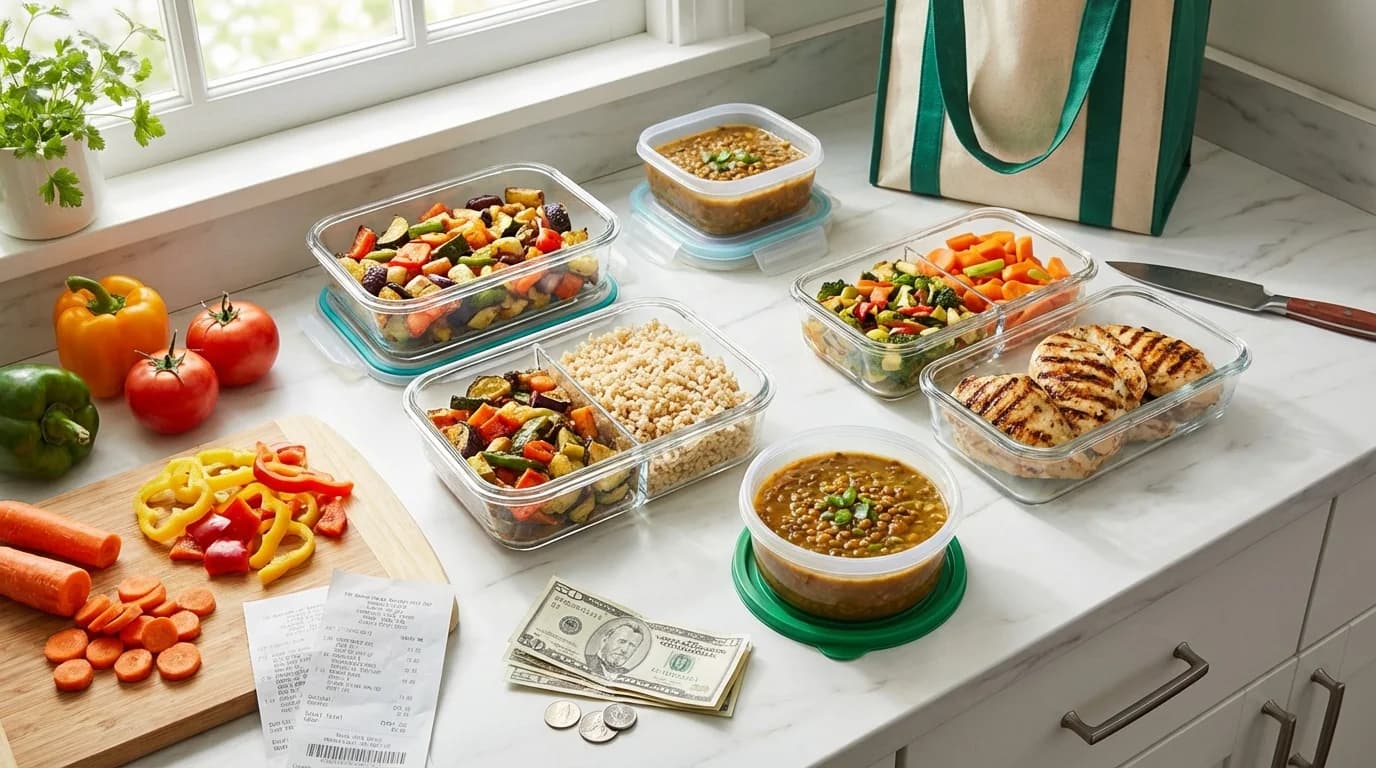
If you're spending $150 or more a week on food and aren't sure where it's going, the answer is usually a combination of two things: unplanned grocery trips and takeout filling the gaps when there's nothing ready to eat. Budget meal prep fixes both. You shop once with a list, you cook once, you eat what you made.
Key Takeaways
- Budget meal prep comes down to 3 cheap proteins, 2 cheap grains, and recipes that share ingredients
- Chicken thighs, dry beans, and eggs are the three cheapest proteins in your rotation
- A $40-50 weekly grocery trip covers 12-15 home-cooked meals for one person
- The 2-hour Sunday cook produces everything you need without touching the kitchen again until Friday
- Pantry staples are the silent budget multiplier — stock once, save every week
The math is clear. A takeout meal averages $15. Five takeout dinners a week is $75 — just for dinner, just for one person. A $45 batch-cooking Sunday produces 12-15 meals. Cost per meal: $3-4. That's where the money goes, and that's where it comes back.
This is the complete budget meal prep guide: the cheapest proteins and grains, three complete shopping lists for different cuisine themes, the 2-hour Sunday cook plan, how to stretch every ingredient further, and the pantry that makes the whole system sustainable beyond week one.
What "$50 a Week" Actually Gets You
For one person, $40-50/week covers:
- 12-15 home-cooked meals ready in the fridge
- Lunch and dinner Monday through Friday
- 2-3 different recipes in rotation
- Some pantry restocking built in
Cost per meal: $3-4.50, depending on region and protein choices. Compare that to $15 takeout average.
For a family of 4, the number roughly doubles: $80-100/week for 20-25 home-cooked meals. That's $5-7 per person per meal — still a third the cost of most restaurant options.
The caveat: these numbers assume a stocked pantry (oil, spices, soy sauce, vinegar). First week may run $60-70 as you buy staples. Weeks 2 through 8 hit $40-50 because you're only buying fresh ingredients.
The Cheapest Proteins for Budget Meal Prep
Not all protein is created equal. The cheapest-per-gram sources make the biggest difference to your weekly budget:
Per 4-oz serving, approximate:
- Dry beans — $0.20
- Eggs — $0.40
- Cottage cheese — $0.50
- Lentils — $0.50
- Whole chicken — $0.80
- Chicken thighs (boneless, skinless) — $1.00
- Ground turkey (93/7) — $1.20
- Ground beef (90/10) — $1.50
- Canned tuna — $1.30
- Tofu (extra firm) — $1.20
The budget meal prep stack: dry beans + eggs + chicken thighs. These three together cover every meal category (breakfast, lunch, dinner), provide complete protein across the week, and together cost $12-16 for a full week's worth of protein for one person.
Whole chicken is even cheaper per pound than thighs but requires more prep. For batch cooking beginners, boneless skinless thighs are the right starting point — less effort, more versatility.
The Cheapest Grains and Starches
| Item | Cost per serving (cooked) |
|---|---|
| Dry rice | $0.10 |
| Dry pasta | $0.20 |
| Oats | $0.10 |
| Potatoes | $0.30-0.40 |
| Dry lentils | $0.20 |
| Flour tortillas | $0.20 each |
A 5-lb bag of dry long-grain rice costs approximately $5-6 and produces 40+ cups cooked. That's 6-8 weeks of grain for one person for under $6. Combined with dry beans ($1.50/bag, 8 cups cooked), you have a full week of grain and legume base for under $8.
Step 1: Pick 3 Recipes That Share Ingredients
The single biggest budget win in meal prep is recipe overlap. If three recipes share 80% of the same ingredients, you buy less total and waste less.
The pattern: same protein, same grain, 2-3 of the same vegetables, pantry items you already have.
How to check before you shop: Look at your three recipes' ingredient lists side by side. If the same chicken, the same rice, and the same onion appear in all three, you're set. If each recipe needs different specialty items, your cart will add up fast.
The Three Budget Themes: Complete Shopping Lists
Theme 1: Tex-Mex ($40-45 Solo)
Recipes:
- Salsa verde shredded chicken (slow cooker, 8 servings)
- Black bean and corn chili (stovetop, 6 servings)
- Sheet-pan quesadillas using leftover shredded chicken (4-6 servings)
Shopping list:
Produce ($10):
- 4 limes ($1.50)
- 2 onions ($1)
- 1 head garlic ($1)
- 1 bunch cilantro ($1)
- 2 bell peppers ($3)
- 2 avocados ($2.50, add fresh each day)
Protein ($14):
- 3 lbs chicken thighs ($9-10)
- 1 dozen eggs ($3)
- 1 lb dry black beans ($1.50)
Pantry ($12):
- 1 jar salsa verde (16 oz) ($3)
- 1 lb dry rice ($2)
- 8 oz pre-shredded cheese ($4)
- 8 large flour tortillas ($3)
Frozen ($4):
- 1 bag frozen corn ($2)
- 1 bag frozen broccoli ($2)
Dairy ($5):
- 32 oz Greek yogurt ($5)
Total: approximately $45. Adjust 10% for regional pricing.
The shared ingredients: chicken + beans + salsa + cheese + tortillas + cilantro + lime + onion. Almost every item on this list goes into at least two of the three recipes.
Theme 2: Mediterranean ($42-48 Solo)
Recipes:
- Greek lemon-oregano chicken thighs (sheet pan, 6 servings)
- White bean and tomato stew (stovetop, 5 servings)
- Chickpea-cucumber salad with feta (no cook, 4 servings)
Shopping list:
Produce ($11):
- 4 lemons ($2.50)
- 1 large cucumber ($1.50)
- 1 pint cherry tomatoes ($3)
- 1 head garlic ($1)
- 1 onion ($0.75)
- 1 bag spinach ($2.50)
Protein ($15):
- 3 lbs chicken thighs ($9-10)
- 1 can chickpeas ($1)
- 1 can white beans ($1)
- 4 oz block feta ($4)
Pantry ($10):
- 1 lb dry rice or orzo ($2-3)
- 1 can diced tomatoes ($1.50)
- 1 cup chicken broth (from box) ($1)
- Olive oil (already stocked or $4)
- Dried oregano + cumin (pantry)
Dairy ($5):
- 32 oz Greek yogurt ($5)
Total: approximately $42-48. Different cuisine, same budget.
Theme 3: Asian-Inspired ($44-50 Solo)
Recipes:
- Slow-cooker honey-garlic chicken (8 servings)
- Egg fried rice with frozen vegetables (4 servings)
- Stir-fry with leftover chicken and broccoli (4 servings)
Shopping list:
Produce ($8):
- 4 green onions ($1.50)
- 1 head garlic ($1)
- 2-inch piece ginger ($1.50)
- 2 heads broccoli ($3)
Protein ($16):
- 3 lbs chicken thighs ($9-10)
- 1 dozen eggs ($3)
- 1 block extra-firm tofu ($3)
Pantry ($12):
- 1.5 lbs jasmine rice ($3)
- Soy sauce (already stocked or $3)
- Sesame oil ($3)
- Honey ($3)
Frozen ($5):
- 1 bag stir-fry vegetable mix ($3)
- 1 bag frozen edamame ($2)
Dairy ($5):
- 32 oz Greek yogurt ($5)
Total: approximately $44-50.
Three themes, same framework, same budget. Rotate week to week to prevent boredom.
The 2-Hour Sunday Cook Plan
This timeline uses the Tex-Mex theme above. The timing logic applies to any theme.
| Time | Action |
|---|---|
| 1:00 | Slow cooker: chicken thighs + salsa verde + spices in. Set 4 hr low. |
| 1:05 | Dry beans in pressure cooker (35 min) or stockpot with water to boil (1 hr). |
| 1:15 | Oven to 425°F. Rice cooker on with 3 cups dry rice. |
| 1:25 | Chop: bell peppers, onion, cilantro. Everything for both chili and garnishes. |
| 1:45 | Black bean chili: drained beans + diced tomatoes + chopped vegetables + spices, stovetop over medium. |
| 2:05 | Chili simmering. Make 3 sauces (cilantro-lime yogurt, quick salsa, hot honey) in mason jars. |
| 2:25 | Rice done. Portion into containers. |
| 2:35 | Slow cooker check — shred chicken with two forks if ready, otherwise let go. |
| 2:50 | Chili off. Cool. Portion. |
| 3:00 | Shred chicken. Portion. Label everything. Done. |
Active time: approximately 90 minutes. Passive cooking the other 30-45.
Note on the slow cooker chicken timing: 4 hours on low is the correct setting if you start it at the beginning. If you're running short on time, 2.5-3 hours on high works but the texture is less consistently tender. The slow cooker chicken is the anchor — start it first, cook everything else around it.
A Real Budget Week: Day-by-Day
| Day | Lunch | Dinner |
|---|---|---|
| Mon | Shredded chicken bowl + rice + beans + cheese | Black bean chili + tortilla |
| Tue | Quesadilla with leftover chicken | Sheet-pan rice + chicken + frozen broccoli |
| Wed | Chili over rice + Greek yogurt | Chicken-and-bean burrito bowl with salsa |
| Thu | Chicken-and-rice bowl with pico | Free / leftovers |
| Fri | Eggs fried with leftover rice | Free / takeout night |
10 home meals. Approximately $45 spent. Cost per meal: $4.50.
Friday's egg fried rice — made with Monday's leftover rice — costs approximately $2 for a filling dinner. Day-old rice makes better fried rice than fresh (less moisture, better texture). Always save leftover rice.
The 12 Pantry Staples That Multiply Your Budget
Without a stocked pantry, every cheap recipe requires buying specialty items that inflate the weekly cost. With these 12 items stocked and refilled as needed (every 4-6 weeks), the weekly fresh shopping shrinks to $25-35.
- Olive oil (good bottle, worth paying for)
- Salt and black pepper
- Garlic powder and onion powder
- Cumin and smoked paprika
- Soy sauce
- Rice vinegar or apple cider vinegar
- Honey
- 3-5 lb bag dry rice
- 2 lbs dry beans (black and pinto, mixed)
- 1 lb pasta
- 2-3 cans diced tomatoes
- Hot sauce (one bottle lasts months)
Total one-time cost to stock: approximately $30-40. Long-term cost per week: approximately $3-5 in replenishment. These items are what allow a $45 shopping list to work — without them, you'd spend $65+ buying pantry basics alongside fresh ingredients every week.
How to Stretch Each Ingredient Further
Cook the whole bag of beans. Eat half this week. Freeze half in 1.5-cup portions in zip bags for next week. A $1.50 bag of dry beans becomes 2 weeks' worth of bean prep for one person.
Buy whole chicken when on sale. Whole chickens frequently go on sale at $0.99-1.49/lb, well below the $2.50-3/lb price of boneless thighs. Roast on Sunday, strip the meat, use bones for broth. Yield per $8 chicken: 3-4 lbs of meat plus 8 cups of broth. Efficient.
Brown the entire package of ground meat. If you buy 2 lbs, brown all of it. Eat half this week, freeze half in 1-cup portions. Same Sunday work produces two weeks of cooked ground protein.
Day-old rice is an asset. Never throw away cooked rice. Day-old rice makes better fried rice than fresh (lower moisture content). A Tuesday egg fried rice dinner costs $2 and uses Monday's leftovers. Add a couple of eggs, frozen vegetables, soy sauce, and sesame oil.
Wilting produce. Greens wilting? Cook them: sauté with garlic, add to soup, blend into a smoothie with a banana. Soft tomatoes? Roast them. Soft bell peppers? Freeze for future stir-fry. Most "going bad" produce has at least 2-3 more days if cooked immediately.
Cheap Sauce Power-Ups
Three sauces to rotate across the week, each costing approximately $1 to make, each lasting 5 days:
Cilantro-lime yogurt: 1 cup Greek yogurt + 1/4 cup chopped cilantro + juice of 1 lime + 1/2 teaspoon cumin + pinch of salt. Stir. Goes on every Tex-Mex meal.
Quick fire-roasted salsa: 1 can fire-roasted diced tomatoes (not drained) + 1/4 white onion + 1 jalapeño + juice of 1 lime + small handful cilantro. Blend until chunky. This is genuinely better than most $4 jarred salsas.
Hot honey: 3 tablespoons honey + 1 teaspoon sriracha or hot sauce. Stir. Drizzles on chicken, eggs, quesadillas, roasted sweet potato. A quarter teaspoon transforms a plain bowl.
Where Budget Beginners Waste Money
Buying name brands on staples. Store-brand black beans, rice, pasta, frozen vegetables, and canned tomatoes are nutritionally identical to name brands. The extra 40-60% you pay for the brand covers the marketing, not the product.
Specialty ingredients for one recipe. A $9 jar of tahini for one meal blows the week's budget. Either commit to a cuisine theme that uses tahini across multiple recipes, or substitute a tahini-adjacent sauce you already have.
Pre-cut produce. Pre-chopped onion, pre-sliced peppers, and pre-minced garlic carry a 30-60% markup. Cut your own. An onion takes 2 minutes. A head of garlic takes 3 minutes with the side-of-knife smash technique.
Single-serve packaging. Individual yogurt cups are 40-60% more expensive per ounce than buying a 32 oz tub and portioning yourself. Same math applies to individual packets of oatmeal, single-serve hummus, and portion-controlled chip bags.
Random recipe selection. Cooking three meals from three different cuisines produces three partial jars of specialty ingredients, three different vegetables with no overlap, and a $70 shopping trip. One cuisine theme, three recipes, shared ingredients. Every time.
Skipping the frozen aisle. Frozen broccoli, peas, corn, mango, and spinach are 30-50% cheaper than fresh and nutritionally comparable. Frozen vegetables are picked at peak ripeness and frozen within hours — they often have better nutrition than fresh produce that's been sitting in transit for a week.
Going From $50 to $40 to $35
$50/week (starting point): Chicken thighs, beans, rice, eggs. Full produce for three recipes. One jarred sauce. Greek yogurt.
$40/week: Swap chicken to every-other week. Add more egg-heavy meals and bean-forward dinners. Skip pre-shredded cheese (buy a small block, grate yourself). Frozen vegetables instead of fresh.
$35/week: The lentil-and-eggs week. This is strict but achievable: dry lentils + eggs + rice + oats + frozen vegetables + a little cheese + onion and garlic. Less variety but full nutrition. Not sustainable long-term for most people, but useful for tight weeks.
$60-70/week (step up): Add salmon or shrimp once a week. Better cheese (actual parmesan rather than the bag). Pasture-raised eggs. A few more fresh herbs. The sweet spot for most solo meal preppers who want variety but care about the budget.
The Budget Batch Cook for a Family of 4
For a family of 4, multiply the solo shopping list roughly by 2.5:
$80-100/week:
- 5 lbs chicken thighs ($14-15)
- 2 lbs ground turkey or beef ($8-10)
- 2 dozen eggs ($6)
- 2 lbs dry black beans ($4)
- 4 lbs jasmine rice ($6)
- Proportionally more produce and pantry
The cook time stays roughly the same — two sheet pans instead of one, a larger Dutch oven or slow cooker, more portions. The 2-hour window still works; the portioning takes an extra 15-20 minutes.
Family-specific budget tricks:
- Whole chicken on sale runs $8-10 and feeds the family for 2 dinners with bones left for broth
- Bean-based meals 2 nights per week (chili, bean tacos, rice and beans) trim the family protein budget by $15-20
- Kids eat smaller portions — plan 2-3 oz cooked protein per child vs 5-6 oz for adults. Don't over-buy protein
See feeding a family on $50 a week for the family-focused budget framework with meal-by-meal cost breakdowns.
FAQ
Can I really meal prep for $50 a week? Solo, with a stocked pantry and a focus on cheap proteins, yes. $40-50/week for 12-15 meals is achievable in most US regions. It's slightly harder in high cost-of-living cities (add $8-12) and easier in lower cost-of-living areas.
What if I don't have a slow cooker? Use a Dutch oven or stockpot in the oven. Most slow cooker recipes work at 300°F, covered, for 2.5-3 hours. Or buy a basic slow cooker — a 6-quart version runs $25-35 and pays for itself in one month of batch cooking.
Are dry beans really worth the extra effort? Yes. A $1.50 bag of dry black beans makes 8 cups cooked. Eight cans of black beans cost $8-12. With a pressure cooker (35 minutes) or an overnight soak and stovetop cook (1 hour), dry beans are the single best budget multiplier in meal prep.
Can I do budget meal prep on a vegetarian diet? Even cheaper. The cheapest proteins are the plant-based ones: dry beans ($0.20/serving), lentils ($0.20/serving), eggs ($0.40/serving), cottage cheese ($0.50/serving), tofu ($1.20/serving). A vegetarian budget meal prep week runs $30-40.
How do I keep budget meal prep from being boring? Rotate the cuisine theme weekly (Tex-Mex week, Mediterranean week, Asian week). Same proteins and grains, completely different flavor profiles. The variety comes from sauces and spices, not from expensive specialty ingredients.
How does budget meal prep compare to cooking fresh nightly? It's slightly cheaper than cooking fresh every night (bulk buying is cheaper than buying daily portions). The real savings come from replacing takeout — if budget meal prep replaces even 3 takeout meals per week, you're saving $30-45/week on a $45 grocery investment.
Save Your Budget Rotation in MyRecipe
The three recipes that work at $45/week become your permanent budget-reset rotation. Save them to a "Tight Budget Week" collection in MyRecipe. When the month-end crunch hits, open the meal planner and re-deploy the same plan in 2 minutes. Browse budget recipes or try MyRecipe free.
About myrecipe
myrecipe helps families save, organize, and share their favorite recipes in one place. Plan meals, create shopping lists, and preserve your culinary traditions.
Start Organizing Recipes