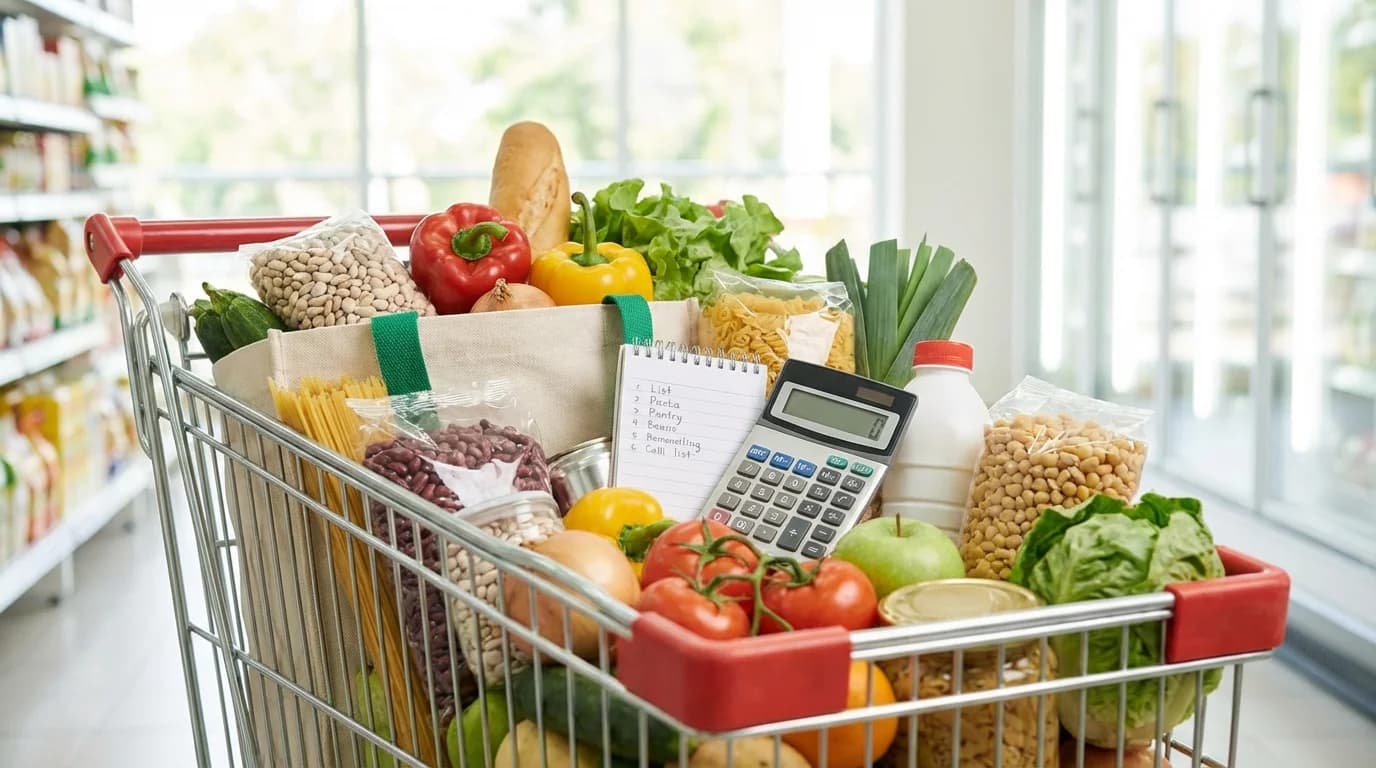
The single most expensive sentence in grocery shopping is "I don't know what we'll eat this week — I'll just grab stuff." That sentence costs the average family $40-80/week in unused food, impulse buys, and double-purchases. The cure isn't coupons. It's a plan.
Key Takeaways
- **Plan before you shop** — the single biggest budget grocery shopping tip; saves 20-30% per trip
- Shop the perimeter (produce, meat, dairy) and skip the middle aisles
- Frozen and canned vegetables are 40% cheaper, often more nutritious
- Buy whole chicken and bone-in cuts; pre-cut and boneless cost 2-3x more
- Use MyRecipe to plan once, generate the shopping list, and never overshop
This guide gives you 20 budget grocery shopping tips that consistently cut bills by 30-50% — the planning system, store strategies, pantry building, and produce-and-protein hacks that work in any region.
Tip 1: Plan Before You Shop
The biggest single tip. Plan 5 dinners for the week and write down what you need. This single step cuts most families' grocery bills by 20-30%. See meal planning for beginners.
Tip 2: Take Inventory First
Before writing the list, look at your fridge, freezer, and pantry. Skipping this step leads to buying a duplicate jar of marinara every other week.
Tip 3: Build the List by Aisle, Not by Recipe
Reorganize your list as you'd walk the store: produce → bakery → meat → dairy → frozen → pantry middle aisles. Saves 15 minutes and prevents back-tracking, which prevents impulse adds.
Tip 4: Stick to the Perimeter
Most of the grocery store's expensive impulse buys are in the middle aisles. Stick to the perimeter (produce, meat, dairy) for 80% of your shopping.
Tip 5: Shop With a Full Stomach
Hungry shoppers spend 30-60% more. Eat before you go. Anything else is sabotage.
Tip 6: Buy Whole Foods, Not Pre-Cut
- Pre-cut fruit costs 2-3x whole
- Pre-shredded cheese costs 1.5-2x
- Boneless skinless chicken costs 2x bone-in
- Pre-marinated meats cost 2-3x
Cut and shred at home. Saves $20-30 per trip.
Tip 7: Use the Frozen Aisle
Frozen vegetables are flash-frozen at peak ripeness — often more nutritious than fresh. They're 30-40% cheaper. Use frozen broccoli, peas, corn, mango, berries.
Tip 8: Embrace Store Brands
Store brand is identical to name brand for: beans, rice, pasta, frozen vegetables, oats, sugar, salt, baking soda, canned tomatoes, dairy, eggs, oil.
Save name-brand purchases for things where quality genuinely matters: olive oil, soy sauce, vanilla extract.
Tip 9: Buy Whole Chicken
A $7 whole chicken yields:
- 4 lbs of meat (the equivalent of $14-18 in chicken parts)
- A frame for free homemade stock
- Bones for braised dishes
Roast it Sunday, eat the breast meat fresh, shred the dark meat for tacos/soup, and stockpot the bones. See how to make homemade stock.
Tip 10: Use Dry Beans Instead of Canned
A $1.50 bag of dry beans makes 8 cups cooked. 8 cans of beans cost $10-12.
Pressure cooker: 35 minutes, no soaking required. Stovetop: 1 hour after a quick soak.
Tip 11: Pick One Cuisine Theme Per Week
Tex-Mex week, Mediterranean week, Asian week. Ingredients overlap across recipes — same lime, same cilantro, same chicken used in 3 different dinners. Cuts the list by 30%.
Tip 12: Shop Once a Week
Multiple trips = multiple impulse buys. Plan, list, and go once. Even if you "forget something," skip the second trip — improvise with what's there.
Tip 13: Use the Bulk Bin (Where Available)
For nuts, seeds, oats, rice, beans, dried fruit, spices — bulk bins are 30-60% cheaper than packaged. Bring your own containers if your store allows.
Tip 14: Buy Meat on Sale, Freeze in Portions
Chicken thighs drop to $1.49/lb on sale (vs. $2.99 regular). Buy 8 lbs, portion into 1.5-lb freezer bags, use over a month. See freezer meal prep.
Tip 15: Skip the Pre-Made Snacks
A box of granola bars: $5 for 8. DIY trail mix from bulk bins: $2 for 8 portions.
Same with pre-made hummus (vs. blending chickpeas), pre-made guac (vs. mashing avocado), and bottled dressings (vs. olive oil + vinegar).
Tip 16: Ditch Bottled Water and Sodas
The single biggest line item in many grocery bills. A pitcher filter + reusable bottle saves $20-40/month per person.
Tip 17: Shop Mid-Week If You Can
Stores restock and discount markdowns mid-week (Wednesday-Thursday). Weekend shopping = picked-over deals. Mid-morning is also less crowded.
Tip 18: Use Coupons and Loyalty Apps Tactically
Don't let coupons drive purchases. Make your list first, then check the store's app for matching coupons. Saves 10-20% with no extra waste.
Tip 19: Compare Per-Unit Prices
The big "bulk" box isn't always cheaper. Most stores show price per ounce/pound on the shelf tag. Compare. Sometimes the smaller package wins.
Tip 20: Plan One "Pantry Meal" Per Week
One night a week, cook entirely from pantry staples + freezer. No fresh ingredients required. Forces you to use what you have. See pantry staple meals.
A Real $45 Solo Shopping List
Putting all this into practice for one person's week:
Produce ($10):
- 4 limes ($1.50)
- 2 onions ($1)
- 1 head garlic ($1)
- 1 bunch cilantro ($1)
- 2 bell peppers ($3)
- 2 avocados ($2.50)
Protein ($14):
- 3 lbs chicken thighs (sale, $10)
- 1 dozen eggs ($3)
- 1 lb dry black beans ($1)
Pantry ($12):
- 1 jar salsa verde ($3)
- 1 lb dry rice ($2)
- 8 oz pre-shredded cheese ($4)
- 8 large flour tortillas ($3)
Frozen ($4):
- 1 bag broccoli ($2)
- 1 bag corn ($2)
Dairy ($5):
- 32 oz Greek yogurt ($5)
Total: ~$45.
A Real $90 Family-of-4 Shopping List
Multiply portions:
Produce ($18): 6 limes, 3 onions, 2 heads garlic, 2 bunches cilantro, 4 bell peppers, 4 avocados, 1 head romaine
Protein ($30): 5 lbs chicken thighs, 1 lb ground beef, 2 dozen eggs, 2 lbs dry beans
Pantry ($25): 2 jars salsa, 2 lbs rice, 1 lb pre-shredded cheese, 16 tortillas, hot sauce
Frozen ($8): 2 bags broccoli, 2 bags corn
Dairy ($10): 64 oz Greek yogurt, 1 lb cheese block
Total: ~$90.
MyRecipe tip: When you build a meal plan in MyRecipe, the shopping list auto-generates and groups by aisle — applying tips 1, 3, and 11 automatically. Open the dashboard.
Where Most Budgets Leak
The places to audit your grocery spending:
- Snacks and convenience packaging. Single-serve everything is 50-100% more expensive.
- Specialty ingredients. $9 jars of unique sauce that get used once.
- Forgotten produce. Bag of greens you didn't get to.
- Drinks. Bottled water, soda, juice.
- "While I'm here" runs. That 6 p.m. trip for missing items.
Cut all five and most families save $40-60/week.
How to Stick to Your Grocery Budget
- Write the list, stick to it, no impulse adds
- Bring exact cash if needed (works for some)
- Use a debit card with low daily limit
- Check the receipt at the car — note where you went over and why
- Shop the same store every week — you learn the prices
FAQ
How much should a family of 4 spend on groceries? $80-150/week depending on region and protein choices. Lean budget: $80-100. Comfortable: $120-150.
Are warehouse stores (Costco, Sam's Club) worth it for budget shopping? For families, often yes — meat, dairy, frozen, and pantry items in bulk. For solos, usually not — too much spoils. Membership pays back in 2-3 trips for families.
What's the single biggest budget grocery shopping tip? Plan before you shop. Saves more than any couponing ever will.
Should I use a meal planning app to save money? Yes — apps that auto-generate shopping lists from meal plans (like MyRecipe) prevent over-buying and make sure nothing's forgotten.
How do I shop on a tight budget without a car? Plan meals around walkable trips. Lean on shelf-stable pantry items (rice, beans, oats, canned tomatoes) plus a small weekly fresh haul.
Is buying organic possible on a budget? Selectively — focus on the "Dirty Dozen" (strawberries, spinach, apples) and skip organic for the "Clean 15" (onions, avocados, citrus). Often store-brand organic is identical price to name-brand conventional.
What's the cheapest healthy meal? Beans + rice + frozen vegetables + an egg. Under $1 per serving. Hits every macro.
Plan Your Cheap Week in MyRecipe
Save your favorite cheap recipes, build a meal plan, and let MyRecipe generate the aisle-grouped shopping list. Try free. The free tier covers 50 recipes — plenty for a budget rotation.
About myrecipe
myrecipe helps families save, organize, and share their favorite recipes in one place. Plan meals, create shopping lists, and preserve your culinary traditions.
Start Organizing Recipes